Paul Graham
Accelerating Python on GPUs
#1about 2 minutes
The rise of general-purpose GPU computing
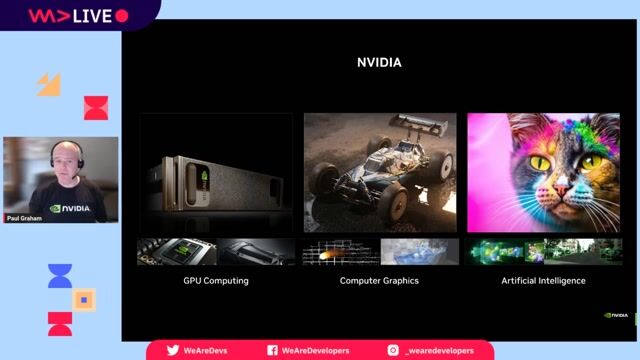
NVIDIA's evolution from a graphics hardware company to a leader in general-purpose computing was accelerated by the use of GPUs for AI with models like AlexNet.
#2about 4 minutes
Why GPUs outperform CPUs for parallel tasks
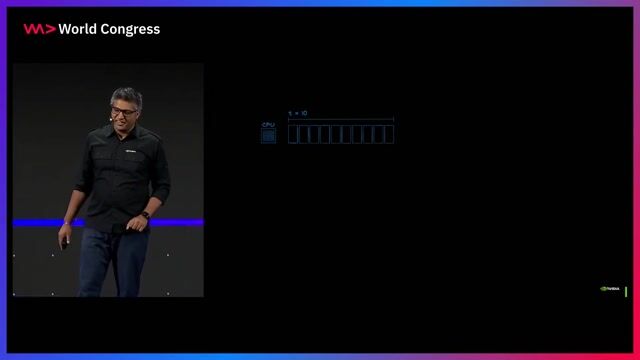
As single-threaded CPU performance plateaued, GPUs offered a path forward with their massively parallel architecture designed for simultaneous computation.
#3about 6 minutes
Understanding modern GPU architecture and operation
GPUs work with CPUs by offloading compute-intensive code and use thousands of threads to hide memory latency, leveraging streaming multiprocessors and high-bandwidth memory.
#4about 7 minutes
Introducing the CUDA parallel computing platform
The CUDA platform is a complete ecosystem with compilers, libraries, and frameworks that enables developers to program GPUs using various languages and abstraction levels.
#5about 3 minutes
Leveraging specialized hardware like Tensor Cores
Specialized hardware like Tensor Cores can be used transparently through high-level libraries like cuDNN or programmed directly with low-level APIs for maximum performance.
#6about 6 minutes
High-level frameworks for domain-specific acceleration
Frameworks like Rapids provide GPU-accelerated, drop-in replacements for popular data science libraries such as Pandas (cuDF) and NetworkX (cuGraph) with minimal code changes.
#7about 10 minutes
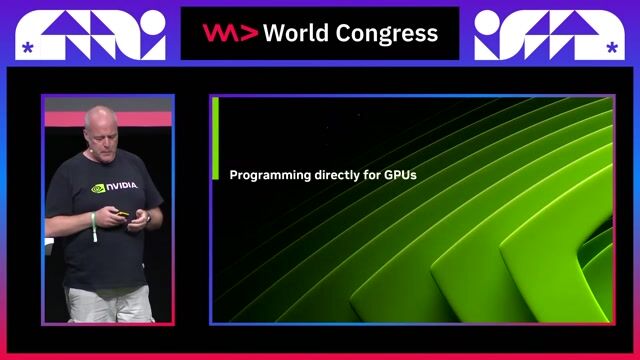
A progressive approach to programming GPUs in Python
Developers can choose from a spectrum of Python libraries, from simple drop-in replacements like CuNumeric and CuPy to JIT compilers like Numba and direct kernel programming with PyCUDA.
#8about 6 minutes
Developer tools and learning resources for GPUs
NVIDIA offers a comprehensive suite of developer tools for profiling and debugging, along with learning resources like the NGC repository, DLI courses, and community events.
Related jobs
Jobs that call for the skills explored in this talk.


Matching moments
01:07 MIN
The evolution of GPU programming with Python
Accelerating Python on GPUs
Unlock full access
Log in or set up an account to access this feature and more.

05:12 MIN
Boosting Python performance with the Nvidia CUDA ecosystem
The weekly developer show: Boosting Python with CUDA, CSS Updates & Navigating New Tech Stacks
Unlock full access
Log in or set up an account to access this feature and more.
01:40 MIN
A spectrum of approaches for programming GPUs in Python
Accelerating Python on GPUs
Unlock full access
Log in or set up an account to access this feature and more.
02:47 MIN
Understanding accelerated computing and GPU parallelism
WWC24 - Ankit Patel - Unlocking the Future Breakthrough Application Performance and Capabilities with NVIDIA
Unlock full access
Log in or set up an account to access this feature and more.
02:11 MIN
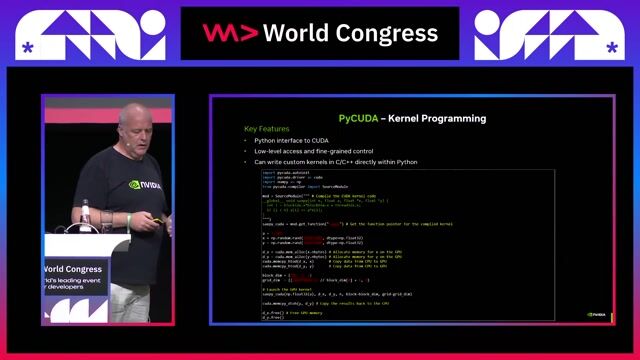
Profiling and debugging GPU-accelerated Python code
Accelerating Python on GPUs
Unlock full access
Log in or set up an account to access this feature and more.
02:56 MIN
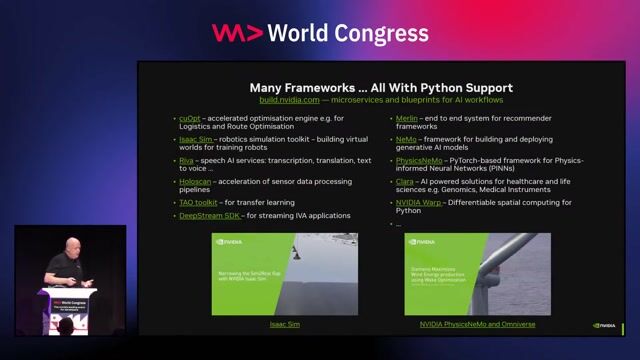
Using high-level frameworks like Rapids for acceleration
Accelerating Python on GPUs
Unlock full access
Log in or set up an account to access this feature and more.
01:33 MIN
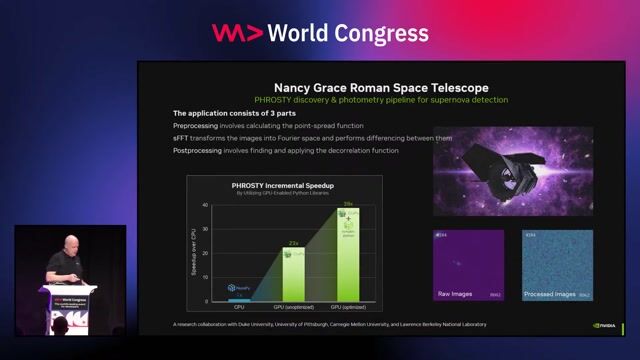
A look at upcoming Python GPU programming tools
Accelerating Python on GPUs
Unlock full access
Log in or set up an account to access this feature and more.
04:05 MIN
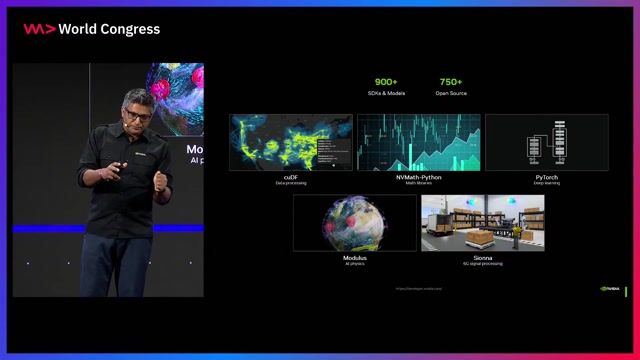
Using NVIDIA libraries to easily accelerate applications
WWC24 - Ankit Patel - Unlocking the Future Breakthrough Application Performance and Capabilities with NVIDIA
Unlock full access
Log in or set up an account to access this feature and more.
Featured Partners
Related Videos
 21:02
21:02CUDA in Python
Andy Terrel
 22:18
22:18Accelerating Python on GPUs
Paul Graham
 24:39
24:39Accelerating Python on GPUs
Paul Graham
 33:44
33:44Concurrency in Python
Fabian Schindler
 57:49
57:49Vectorize all the things! Using linear algebra and NumPy to make your Python code lightning fast.
Jodie Burchell
 46:30
46:3030 Golden Rules of Deep Learning Performance
Anirudh Koul
 39:04
39:04Python-Based Data Streaming Pipelines Within Minutes
Bobur Umurzokov
 50:38
50:38Python Data Visualization @ Deepnote (w/ PyViz overview)
Radovan Kavický
Related Articles
View all articles



From learning to earning
Jobs that call for the skills explored in this talk.


CONTIAMO GMBH
Berlin, Germany
Senior
Python
Docker
TypeScript
PostgreSQL


MedAustron EBG
€46K
GIT
NumPy
Pandas
Data analysis
+1