Fabian Schindler
Concurrency in Python
#1about 4 minutes
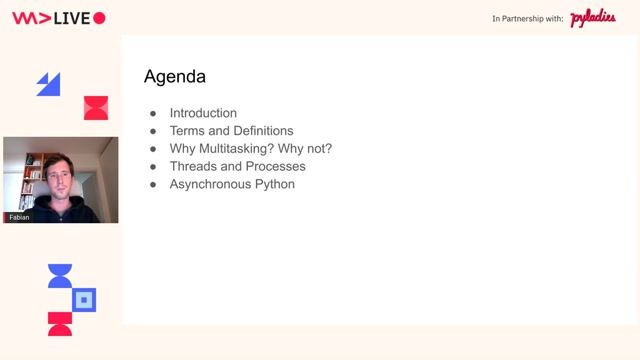
Defining concurrency, parallelism, and multitasking
Key terms like concurrency, parallelism, cooperative multitasking, and preemptive multitasking are defined to build a foundational understanding.
#2about 3 minutes
Weighing the benefits and complexity of multitasking
Multitasking can improve performance and reduce costs, but it introduces complexity, non-determinism, and is limited by Amdahl's Law.
#3about 5 minutes
Understanding the differences between processes and threads
Processes are isolated with higher overhead, while threads are lightweight and share memory, with examples using Python's `threading` and `multiprocessing` modules.
#4about 1 minute
Simplifying concurrency with executor pools
The `concurrent.futures` module provides a high-level interface with `ThreadPoolExecutor` and `ProcessPoolExecutor` to easily apply a function to multiple data items.
#5about 5 minutes
How to prevent data corruption with locks
Race conditions occur when multiple threads access shared data simultaneously, which can be prevented by using a mutex or `threading.Lock` to ensure exclusive access.
#6about 2 minutes
How Python's global interpreter lock affects multithreading
The GIL is a mutex that protects access to Python objects, preventing multiple native threads from executing Python bytecodes at the same time and impacting CPU-bound tasks.
#7about 4 minutes
Overcoming thread limitations with event-driven programming
The C10k problem highlights the inefficiency of a thread-per-client model, leading to event-driven solutions like asynchronous programming to handle many concurrent connections.
#8about 5 minutes
Writing concurrent code with async and await
Python's `async` and `await` keywords enable cooperative multitasking, allowing you to run many tasks concurrently on a single thread using an event loop from the `asyncio` module.
#9about 2 minutes
Building high-performance web services with Starlette
The Starlette web framework demonstrates how `asyncio` can be used to build highly concurrent web servers capable of handling many clients efficiently.
#10about 2 minutes
Q&A on Python's speed and choosing thread counts
Answers to common questions address Python's perceived slowness by working around limitations like the GIL and explain that benchmarking is key to finding the optimal number of threads.
Related jobs
Jobs that call for the skills explored in this talk.


Matching moments
04:10 MIN
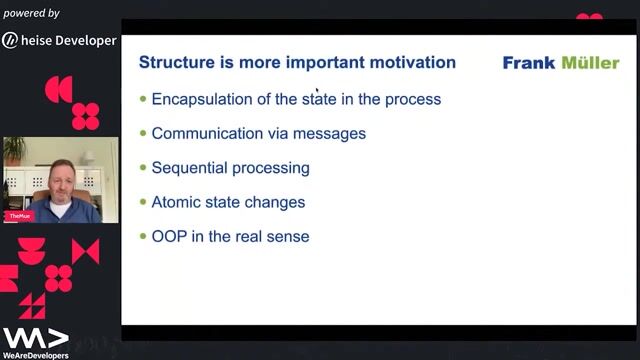
The evolution from threads to modern concurrency
Concurrency with Go
Unlock full access
Log in or set up an account to access this feature and more.
03:01 MIN
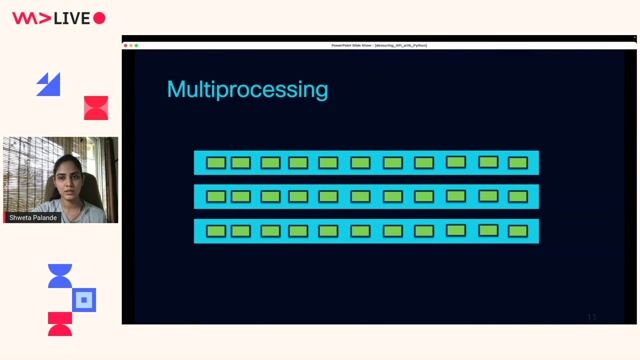
Explaining multiprocessing and multithreading with analogies
Devouring APIs with Python
Unlock full access
Log in or set up an account to access this feature and more.

05:30 MIN
Concurrency as a natural model for software design
Concurrency with Go
Unlock full access
Log in or set up an account to access this feature and more.
07:14 MIN
Q&A on concurrency models and developer tools
Devouring APIs with Python
Unlock full access
Log in or set up an account to access this feature and more.
02:30 MIN
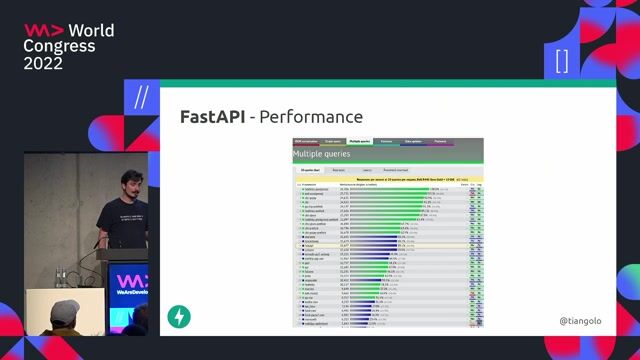
Achieving high performance with async support
Intro to FastAPI
Unlock full access
Log in or set up an account to access this feature and more.
04:35 MIN
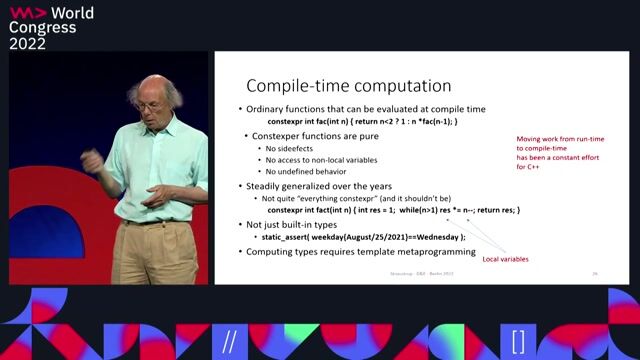
Concurrency support from memory models to coroutines
The Design and Evolution of C++
Unlock full access
Log in or set up an account to access this feature and more.

02:27 MIN
Moving from concurrency to true parallelism
Multithreading in Javascript: A guide to Web Workers
Unlock full access
Log in or set up an account to access this feature and more.
06:56 MIN
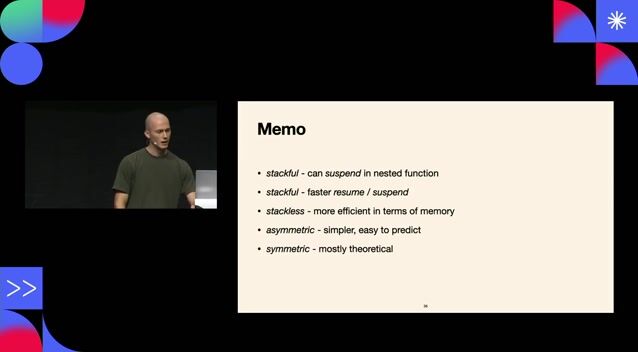
How coroutines fit into modern threading models
Coroutine explained yet again 60 years later
Unlock full access
Log in or set up an account to access this feature and more.
Featured Partners
Related Videos
 59:43
59:43Accelerating Python on GPUs
Paul Graham
 59:07
59:07Devouring APIs with Python
Shweta Palande
 21:02
21:02CUDA in Python
Andy Terrel
 37:51
37:51Exploring Durable Execution with Python
Geetha Anne
 57:49
57:49Vectorize all the things! Using linear algebra and NumPy to make your Python code lightning fast.
Jodie Burchell
 27:11
27:11Full Stack Web Apps With Nothing But Python
Eli Holderness
 25:29
25:29Python: Behind the Scenes
Diana Gastrin
 58:28
58:28Anvil: Full Stack Web Apps With Nothing But Python
Meredydd Luff
Related Articles
View all articles.gif?w=240&auto=compress,format)

.webp?w=240&auto=compress,format)

From learning to earning
Jobs that call for the skills explored in this talk.


CONTIAMO GMBH
Berlin, Germany
Senior
Python
Docker
TypeScript
PostgreSQL

Peter Park System GmbH
München, Germany
Senior
Python
Docker
Node.js
JavaScript


