
Frank Müller
Concurrency with Go
#1about 6 minutes
Concurrency as a natural model for software design
Modern software can be structured like the real world by composing independent processes that communicate with each other.
#2about 4 minutes
The evolution from threads to modern concurrency
Modern runtimes manage lightweight processes, moving beyond complex, error-prone threading with mutexes to encapsulated state and message passing.
#3about 6 minutes
Actor model vs communicating sequential processes (CSP)
Go's concurrency is built on the Communicating Sequential Processes (CSP) model, where anonymous processes communicate over named channels, unlike the Actor model's named processes with inboxes.
#4about 8 minutes
Common patterns for concurrent architectures
Concurrency enables powerful design patterns like service providers, resource managers, supervisors for fault tolerance, and ETL data pipelines.
#5about 4 minutes
An overview of the Go programming language
Go is a pragmatic, multi-paradigm language designed by pioneers like Ken Thompson and Rob Pike, featuring implicit interfaces and first-class functions.
#6about 8 minutes
Go's core concurrency primitives: goroutines and channels
Lightweight concurrent functions called goroutines are launched with the `go` keyword and communicate or synchronize over typed channels.
#7about 3 minutes
Waiting for goroutines with sync.WaitGroup
The `sync.WaitGroup` type provides a simple and effective mechanism to block the main goroutine until a collection of background jobs has completed.
#8about 6 minutes
Streaming and piping data with channels
Channels can be used to stream data between goroutines, and closing a channel signals the end of the stream to a ranging receiver.
#9about 5 minutes
Building a concurrent service with multiple channels
A common but verbose approach to building a concurrent service involves creating separate channels for each type of operation, leading to complex state management.
#10about 5 minutes
A simpler actor-like pattern using a function channel
A more elegant service pattern uses a single channel to send functions, which are then executed sequentially by the background goroutine, simplifying the API and centralizing logic.
Related jobs
Jobs that call for the skills explored in this talk.


Matching moments
04:35 MIN
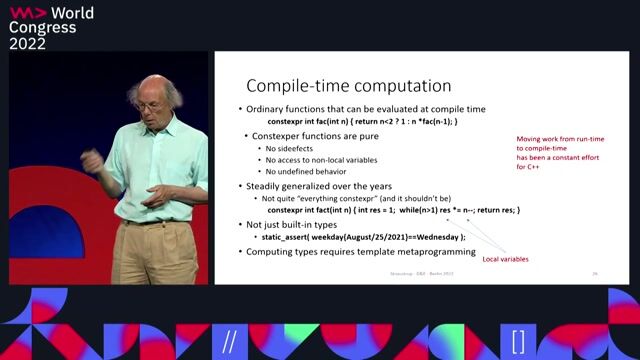
Concurrency support from memory models to coroutines
The Design and Evolution of C++
Unlock full access
Log in or set up an account to access this feature and more.
03:26 MIN
Simplifying concurrency with structured coroutines
Moving from Java to Kotlin
Unlock full access
Log in or set up an account to access this feature and more.
03:52 MIN
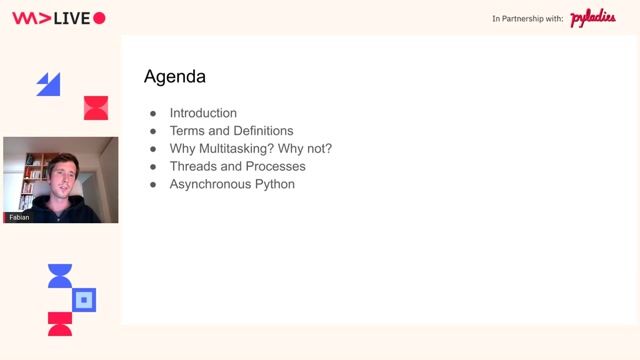
Defining concurrency, parallelism, and multitasking
Concurrency in Python
Unlock full access
Log in or set up an account to access this feature and more.
07:14 MIN
Q&A on concurrency models and developer tools
Devouring APIs with Python
Unlock full access
Log in or set up an account to access this feature and more.

05:31 MIN
Why Go is a great choice for AI-generated code
MLOps and AI Driven Development
Unlock full access
Log in or set up an account to access this feature and more.
02:05 MIN
Understanding the goals of Java's Project Loom
Java's Project Loom & Co - the end for reactive programming?
Unlock full access
Log in or set up an account to access this feature and more.
02:22 MIN
Moving from C# to modern languages like Go
Coffee with developers - Brian Morrison
Unlock full access
Log in or set up an account to access this feature and more.

08:58 MIN
Addressing the technical challenge of concurrency in virtual events
Exploring the Potential of Decentraland
Unlock full access
Log in or set up an account to access this feature and more.
Featured Partners
Related Videos
 25:08
25:08Go Generics
Nils Kasseckert
 26:48
26:48An Applied Introduction to eBPF with Go
Ozan Sazak
 33:44
33:44Concurrency in Python
Fabian Schindler
 30:43
30:43Coroutine explained yet again 60 years later
Mikhail Maslo
 52:51
52:51Introduction and pitfalls of Java's new concurrency model
David Vlijmincx
 1:00:16
C++ in constrained environments
Bjarne Stroustrup
 26:34
26:34Asynchronicity and multithreading in C#
Grzegorz Lang
 26:54
26:54Functional Programming in C++
Jonathan Müller
Related Articles
View all articles.gif?w=240&auto=compress,format)

.jpg?w=240&auto=compress,format)

From learning to earning
Jobs that call for the skills explored in this talk.


Sector Nord AG
Oldenburg, Germany
Intermediate
Senior
Docker
InfluxDB


Percona
Frankfurt, Germany
Remote
Senior
Linux
MySQL
NoSQL
Redis
+11
Meplato Gmbh
Grafana
PostgreSQL
Apache Kafka
Elasticsearch
Continuous Integration