Marcy Charollois
Racism fuels users experiences : why you should understand the strength of biased narratives.
#1about 3 minutes
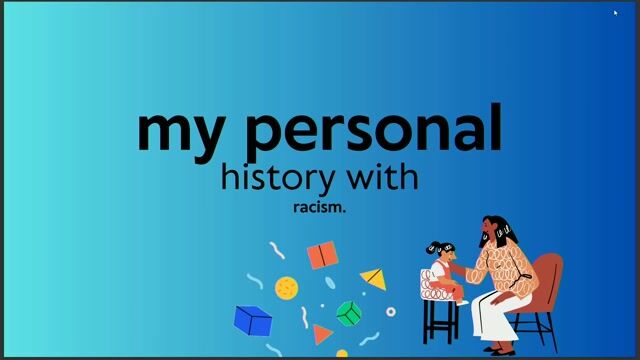
Personal experiences reveal the harm of racial bias
A personal narrative illustrates how being categorized by race can be a dehumanizing experience from childhood into professional life.
#2about 4 minutes
Challenging the "neutral" default in user experience
The concept of a "neutral" user experience is often a white-centric default, as shown by examples like bandaids and an inclusive luggage design project.
#3about 2 minutes
Adding an ethical layer to core UX goals
Standard UX goals like functionality and usability must be expanded to include ethical responsibility to move beyond a white-driven product mindset.
#4about 4 minutes
Using cognitive biases to improve user representation
Understanding the "norm" and leveraging cognitive biases like the peak-end rule helps strategically place diverse representations where they will be most memorable.
#5about 2 minutes
How facial recognition fails diverse cultural expressions
Technology like Face ID often fails to recognize people with traditional tattoos like the Māori Tā moko, treating them as errors due to biased datasets.
#6about 3 minutes
Addressing the legacy of slavery in tech
The historical context of slavery reveals why language like "master/slave" is harmful and how dehumanizing biases reappear in algorithms that misidentify Black people.
#7about 3 minutes
Practical design tactics for global inclusivity
Inclusive design requires practical considerations like offering diverse emoji skin tones, accommodating various name formats, and supporting different reading directions through internationalization.
#8about 2 minutes
Building inclusive design systems and user research practices
Create your own inclusive design system and conduct user research with empathy by prioritizing consent, cultural appropriateness, and data vulnerability.
#9about 5 minutes
Confronting systemic racism's impact on algorithms
To build anti-racist tech, we must question our privileges and recognize how systemic biases lead to harmful outcomes in healthcare and recruiting algorithms.
Related jobs
Jobs that call for the skills explored in this talk.


Matching moments
03:22 MIN
The real-world impact of lacking diversity
KEYNOTE: Hidden Histories
Unlock full access
Log in or set up an account to access this feature and more.
01:12 MIN
Using AI to enhance inclusivity and accessibility
Insight into AI-Driven Design
Unlock full access
Log in or set up an account to access this feature and more.

04:01 MIN
The developer's responsibility to build inclusive technology
The Impact of Technology on Democracy
Unlock full access
Log in or set up an account to access this feature and more.
03:09 MIN
Recap of key problems and four prevention strategies
Algorithmic Bias- Preventing Unfairness in your Algorithms
Unlock full access
Log in or set up an account to access this feature and more.

03:38 MIN
Putting people at the center of AI systems
Rethinking Intelligence: AI, Accessibility, and the Future of Inclusive Work - Artur Ortega
Unlock full access
Log in or set up an account to access this feature and more.

02:52 MIN
Preventing bias by starting with data and designing for fairness
Algorithmic Bias- Preventing Unfairness in your Algorithms
Unlock full access
Log in or set up an account to access this feature and more.
03:53 MIN
How training data creates biased AI models
The shadows that follow the AI generative models
Unlock full access
Log in or set up an account to access this feature and more.

02:42 MIN
Understanding and addressing inherent bias in AI models
AI & Ethics
Unlock full access
Log in or set up an account to access this feature and more.
Featured Partners
Related Videos
 28:39
28:39It’s easy to create a good looking product, but what about a useful one?
Eleftheria Batsou
 23:05
23:05Design patterns for neurodiversity and mental health
Mina Nabinger
 31:30
31:30Accessibility powered by AI
Ramona Domen
 59:00
59:00One size fits all! Not at all!
Ixchel Ruiz
 30:32
30:32Algorithmic Bias- Preventing Unfairness in your Algorithms
Prathyusha Charagondla
 27:01
27:01UX is a fullstack job!
Marcel Bagemihl & Miriam Becker
 14:29
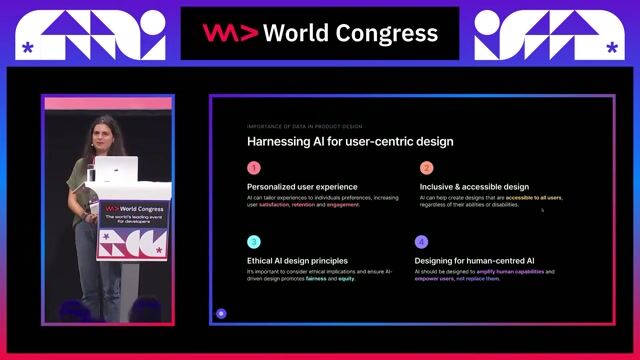
14:29Insight into AI-Driven Design
Madalena Costa
 21:13
21:13Breaking the bias in Tech
Anna John
Related Articles
View all articles

.gif?w=240&auto=compress,format)

From learning to earning
Jobs that call for the skills explored in this talk.


Neural Concept
Lausanne, Switzerland
Machine Learning