Tal Joffe
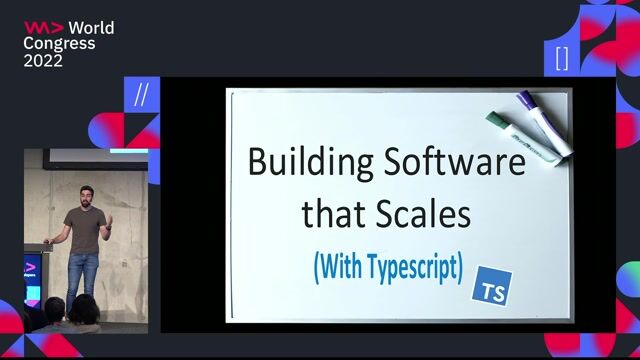
Building software that scales with Typescript
#1about 3 minutes
Defining the core principles of scalable software
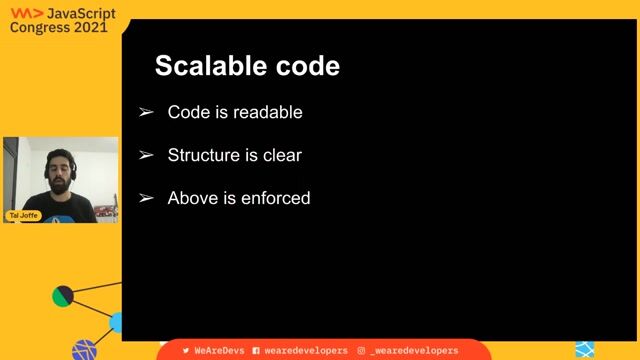
A scalable project is defined by having readable code, a clear structure, and strong enforcement of its architecture.
#2about 2 minutes
Improving code readability with explicit type signatures
TypeScript function signatures clarify parameter and return types, allowing developers to understand behavior without reading the implementation.
#3about 5 minutes
Separating data from logic for better structure
By separating data objects from the logic that manipulates them, you can adhere to the Single Responsibility Principle and create a more maintainable structure.
#4about 6 minutes
Applying high-level architectural patterns like Clean Architecture
Organize your project into stable layers based on Clean Architecture principles, with a clear folder structure for components like APIs, managers, and data access.
#5about 5 minutes
Enforcing structure with interfaces and design patterns
Use TypeScript interfaces to enforce consistent design patterns, such as Command Query Separation (CQS), and establish clear conventions for your components.
#6about 4 minutes
Reducing the overhead and verbosity of TypeScript
Minimize TypeScript's boilerplate by leveraging type inference, preferring composition over inheritance, and using type utilities to create derivative types.
#7about 4 minutes
Measuring scalability and building confidence with tests
Evaluate your project's scalability by how easy it is to locate code for changes and build confidence using the testing trophy model, which prioritizes integration tests.
#8about 2 minutes
How to migrate legacy projects to a clean architecture
When migrating a legacy codebase, start by refactoring the peripheral layers like data access and gateways before tackling the core business logic.
#9about 2 minutes
Why folder structure still matters with modern IDEs
A deliberate folder structure is crucial for discoverability when you don't know a file's exact name and helps prevent code duplication and coupling.
#10about 2 minutes
A practical defense of the anemic domain model
While often labeled an anti-pattern, separating data from methods into an anemic domain model can be a very useful and practical pattern for structuring code.
#11about 2 minutes
A minimal mocking strategy for integration tests
For robust integration tests, mock as little as possible, focusing only on true external dependencies like third-party services to ensure tests reflect production behavior.
Related jobs
Jobs that call for the skills explored in this talk.


Matching moments
02:37 MIN
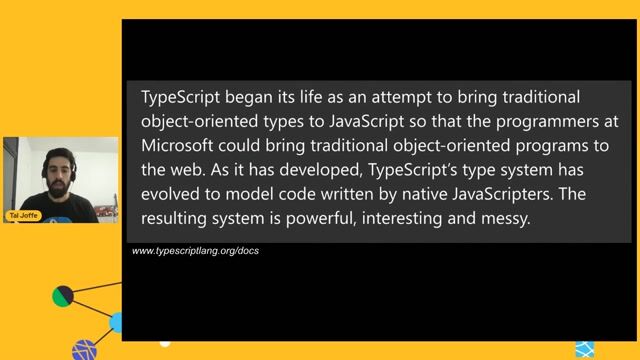
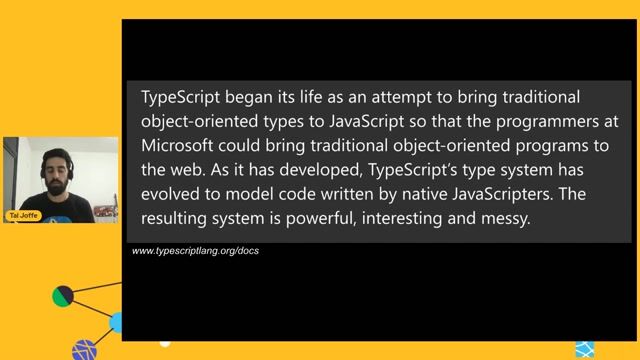
Understanding TypeScript's origins and role in scalability
All you need is types
Unlock full access
Log in or set up an account to access this feature and more.
01:48 MIN
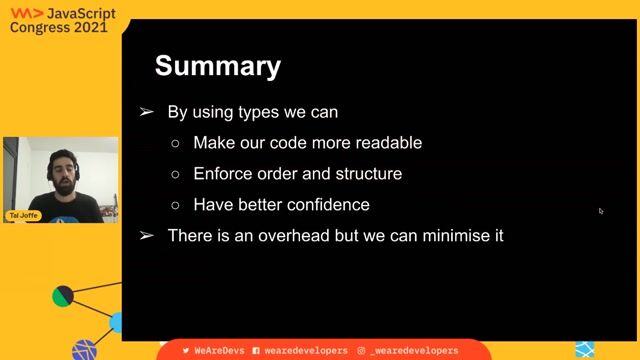
Summary of using types for scalable codebases
All you need is types
Unlock full access
Log in or set up an account to access this feature and more.
03:59 MIN
Achieving scalability with readability, structure, and enforcement
All you need is types
Unlock full access
Log in or set up an account to access this feature and more.
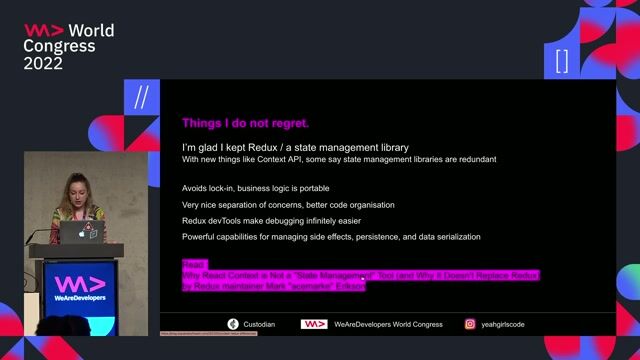
03:47 MIN
Why TypeScript is essential for building large applications
Building a large, complex product from the ground up with typescript & Atomic Design:lessons learned
Unlock full access
Log in or set up an account to access this feature and more.
09:25 MIN
Strategies for migrating large codebases to TypeScript
WeAreDevelopers LIVE - Whats Nuxt and Next for app development, 20 years AJAX and more
Unlock full access
Log in or set up an account to access this feature and more.
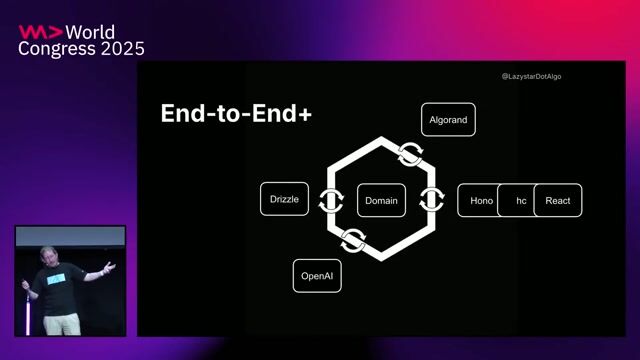
01:21 MIN
Final takeaways for building modern TypeScript applications
End-to-End TypeScript: Completing the Modern Development Stack
Unlock full access
Log in or set up an account to access this feature and more.
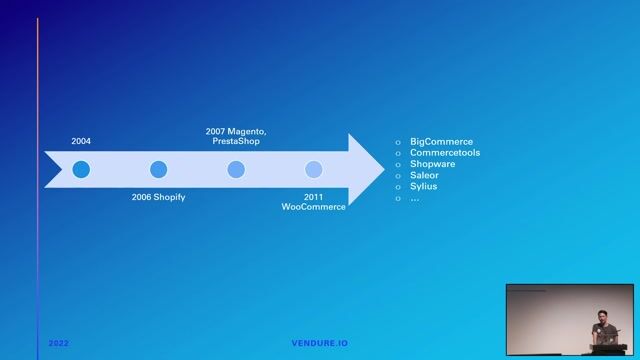
03:57 MIN
Why JavaScript and TypeScript dominate modern development
Modern Headless Commerce with Vendure
Unlock full access
Log in or set up an account to access this feature and more.

01:38 MIN
How to convince your team to adopt TypeScript
4 Steps from JavaScript to TypeScript
Unlock full access
Log in or set up an account to access this feature and more.
Featured Partners
Related Videos
 48:56
48:56All you need is types
Tal Joffe
 28:13
28:13Building a large, complex product from the ground up with typescript & Atomic Design:lessons learned
Nathalia Rus
 29:44
29:44Don't compromise on speedy delivery nor type-safety by choosing TypeScript
Jens Claes
 32:28
32:284 Steps from JavaScript to TypeScript
Phil Nash
 43:20
43:20Microfrontends at Scale
Josh Goldberg
 31:13
31:13Lies we Tell Ourselves As Developers
Stefan Baumgartner
 29:30
29:30Where we're going we don't need JavaScript - Programming with Type Annotations
Peter Kröner
 28:44
28:44Advanced Typing in TypeScript
Lars Hupel
Related Articles
View all articles



From learning to earning
Jobs that call for the skills explored in this talk.


doinstruct Software GmbH
Berlin, Germany
Senior
GIT
JavaScript
TypeScript

Schulz.codes GmbH
Darmstadt, Germany
Intermediate
Senior
React
JavaScript
TypeScript

autoiXpert GmbH & Co. KG
Stuttgart, Germany
Senior
Node.js
Angular
MongoDB
TypeScript


Scalable GmbH
Berlin, Germany
Remote
Senior
DevOps
Kotlin
NestJS
Node.js
+4
Scalable GmbH
Munich, Germany
Remote
Senior
DevOps
Kotlin
NestJS
Node.js
+4
ELFIN Engineering and Solutions GmbH
€60-68K
Vue.js
Node.js
TypeScript
Software Architecture
+1