Stefan Baumgartner
Lies we Tell Ourselves As Developers
#1about 2 minutes
The hidden dangers in everyday TypeScript code
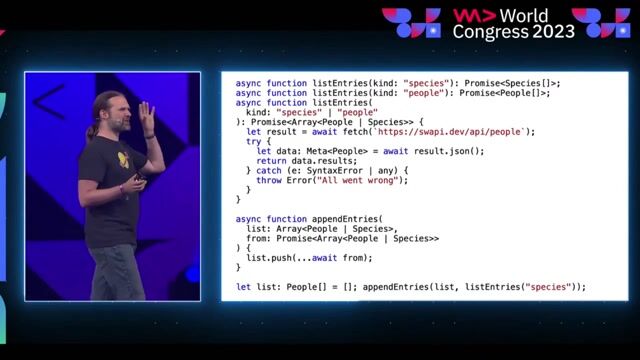
A seemingly simple code snippet that passes type checks can still be riddled with runtime errors that TypeScript is supposed to prevent.
#2about 2 minutes
Why network requests returning `any` breaks type safety
The `any` type returned by default from I/O operations like `fetch` allows unsafe assignments, which can be mitigated by patching interfaces to return `unknown`.
#3about 2 minutes
Handling errors safely with the `unknown` type
Since anything can be thrown in JavaScript, catch block errors are typed as `any`, but using `unknown` and `instanceof` checks provides a safer way to handle them.
#4about 2 minutes
The disconnect between function overloads and implementation
Function overloads define a public API but do not enforce that the implementation correctly returns the specified types for each overload signature.
#5about 1 minute
Using conditional types to enforce return types
Conditional types can replace function overloads to create a more complex type signature that forces the developer to correctly handle different return paths.
#6about 3 minutes
How mutability breaks TypeScript's type tracking
TypeScript does not track type changes that occur from mutable operations like `array.push`, leading to a disconnect between the static type and the runtime value.
#7about 5 minutes
The trade-offs and lies within the solutions
Each proposed solution, from declaration merging to generics, introduces its own set of new problems and potential bugs.
#8about 3 minutes
Understanding TypeScript's core design philosophy
TypeScript intentionally prioritizes developer productivity over a provably sound type system, requiring developers to understand and manage these trade-offs.
#9about 3 minutes
The developer's role is to make conscious decisions
Software engineering is about making informed decisions and choosing the right tools and patterns for your team, rather than following dogmatic advice.
#10about 6 minutes
Q&A on Rust, `instanceof` alternatives, and `ts-reset`
The speaker answers audience questions about his favorite language (Rust), using Zod for runtime type checking instead of `instanceof`, and the trade-offs of using `ts-reset`.
Related jobs
Jobs that call for the skills explored in this talk.


Matching moments
02:00 MIN
Why TypeScript is like code coverage, not a security guarantee
Friend or Foe? TypeScript Security Fallacies
Unlock full access
Log in or set up an account to access this feature and more.

04:07 MIN
Evaluating the strengths and limitations of TypeScript
Don't compromise on speedy delivery nor type-safety by choosing TypeScript
Unlock full access
Log in or set up an account to access this feature and more.
01:58 MIN
The common misconception of TypeScript as a security tool
Friend or Foe? TypeScript Security Fallacies
Unlock full access
Log in or set up an account to access this feature and more.
02:46 MIN
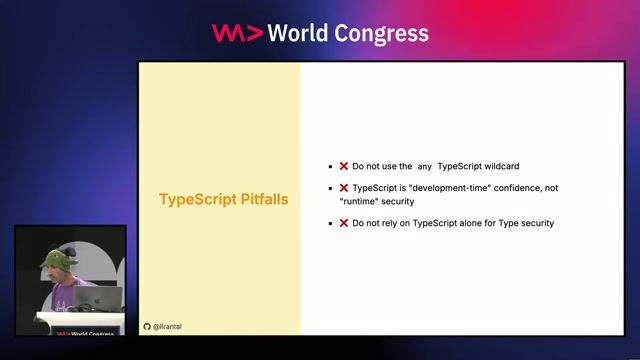
Why TypeScript is a dev-time tool, not a runtime guardrail
Friend or Foe? TypeScript Security Fallacies
Unlock full access
Log in or set up an account to access this feature and more.
02:11 MIN
Understanding the power and popularity of TypeScript
End-to-End TypeScript: Completing the Modern Development Stack
Unlock full access
Log in or set up an account to access this feature and more.
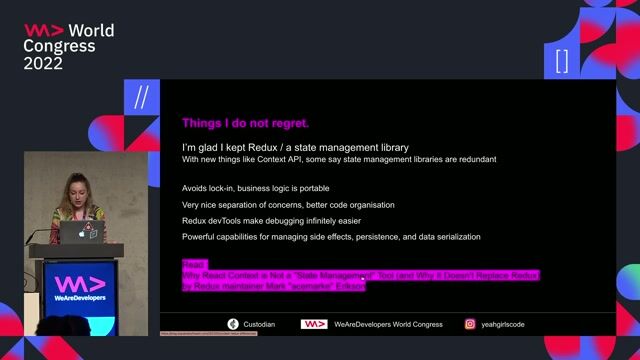
03:47 MIN
Why TypeScript is essential for building large applications
Building a large, complex product from the ground up with typescript & Atomic Design:lessons learned
Unlock full access
Log in or set up an account to access this feature and more.

01:38 MIN
How to convince your team to adopt TypeScript
4 Steps from JavaScript to TypeScript
Unlock full access
Log in or set up an account to access this feature and more.
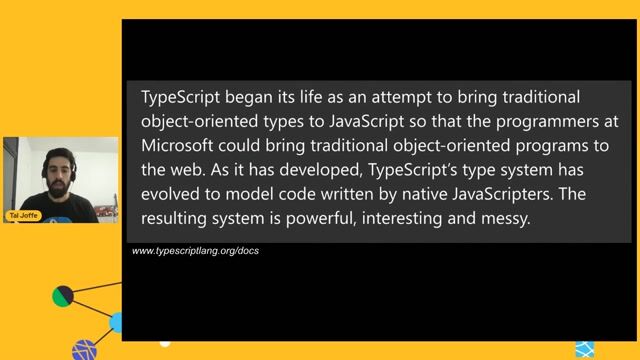
02:37 MIN
Understanding TypeScript's origins and role in scalability
All you need is types
Unlock full access
Log in or set up an account to access this feature and more.
Featured Partners
Related Videos
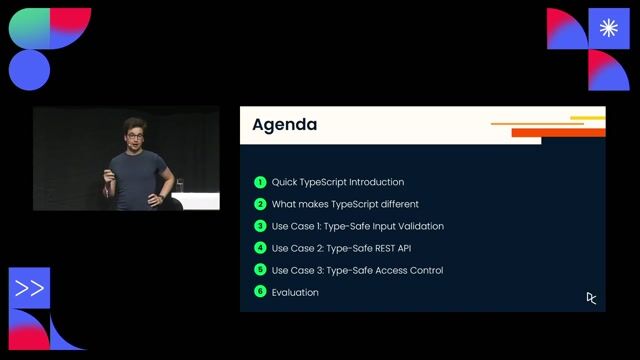 29:44
29:44Don't compromise on speedy delivery nor type-safety by choosing TypeScript
Jens Claes
 48:56
48:56All you need is types
Tal Joffe
 43:27
43:27Do TypeScript without TypeScript
Simone Sanfratello
 43:20
43:20The Art and Craft of Type Development
Michael Hladky & Stefan Baumgartner
 32:28
32:284 Steps from JavaScript to TypeScript
Phil Nash
 44:31
44:31Vuejs and TypeScript- Working Together like Peanut Butter and Jelly
Rob Richardson
 28:44
28:44Advanced Typing in TypeScript
Lars Hupel
 29:30
29:30Where we're going we don't need JavaScript - Programming with Type Annotations
Peter Kröner
Related Articles
View all articles



From learning to earning
Jobs that call for the skills explored in this talk.


doinstruct Software GmbH
Berlin, Germany
Senior
GIT
JavaScript
TypeScript

Schulz.codes GmbH
Darmstadt, Germany
Intermediate
Senior
React
JavaScript
TypeScript

Lotum media GmbH
Bad Nauheim, Germany
Senior
Node.js
JavaScript
TypeScript

autoiXpert GmbH & Co. KG
Stuttgart, Germany
Senior
Node.js
Angular
MongoDB
TypeScript


ELFIN Engineering and Solutions GmbH
€60-68K
Vue.js
Node.js
TypeScript
Software Architecture
+1