Tal Joffe
All you need is types
#1about 3 minutes
Understanding TypeScript's origins and role in scalability
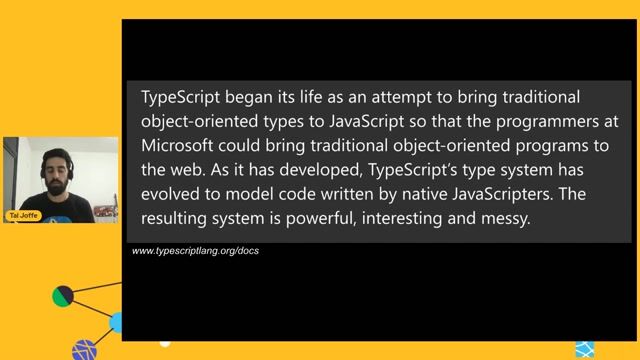
TypeScript was created for object-oriented developers but can be used in a more native JavaScript style to help manage large-scale projects.
#2about 4 minutes
Achieving scalability with readability, structure, and enforcement
Scalable codebases depend on readability for faster comprehension, clear structure for discoverability, and enforcement to maintain quality over time.
#3about 6 minutes
Improving code structure by separating data from logic
Instead of combining data and behavior in classes, separate them into distinct types for data and functions for logic to create a clearer, more maintainable structure.
#4about 6 minutes
Using types to enforce data integrity and logic patterns
TypeScript natively enforces data shapes, and you can extend this by using utility types and creating custom types to enforce design patterns like CQS.
#5about 8 minutes
Minimizing boilerplate code with advanced TypeScript features
Reduce code overhead by leveraging type inference, avoiding complex OOP patterns, and using utility types like `keyof` and `ReturnType` to generate new types from existing ones.
#6about 7 minutes
Building confidence with static analysis and typed testing
TypeScript's static analysis catches errors at build time, and using explicit types in tests ensures mocks are accurate, leading to more reliable integration tests.
#7about 2 minutes
Summary of using types for scalable codebases
By focusing on types for readability, structure, and enforcement, developers can build scalable applications while minimizing boilerplate through a functional approach.
#8about 6 minutes
Applying clean code principles for naming and errors
Follow the "clean code" principle that names should reveal intent, and adopt a functional approach to error handling by returning errors instead of throwing them.
#9about 3 minutes
Deciding between types, interfaces, and transpilers
Use types and interfaces interchangeably based on preference, with interfaces being more idiomatic for classes, and combine TypeScript with Babel for broader browser compatibility.
#10about 4 minutes
Practical advice on undefined returns and JS migration
Use union types with `undefined` to make potential null states explicit, and migrate existing JavaScript projects by converting code in focused sprints, using `any` as a temporary measure.
Related jobs
Jobs that call for the skills explored in this talk.


Matching moments
03:47 MIN
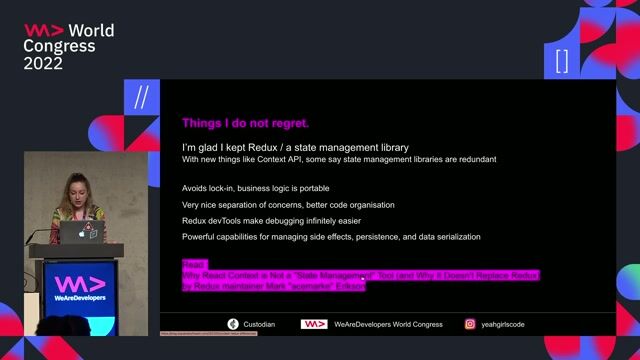
Why TypeScript is essential for building large applications
Building a large, complex product from the ground up with typescript & Atomic Design:lessons learned
Unlock full access
Log in or set up an account to access this feature and more.
02:11 MIN
Understanding the power and popularity of TypeScript
End-to-End TypeScript: Completing the Modern Development Stack
Unlock full access
Log in or set up an account to access this feature and more.

03:44 MIN
Understanding the core design principles of TypeScript
Advanced Typing in TypeScript
Unlock full access
Log in or set up an account to access this feature and more.
01:21 MIN
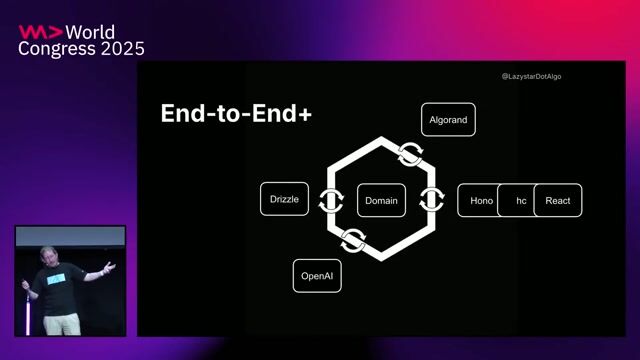
Final takeaways for building modern TypeScript applications
End-to-End TypeScript: Completing the Modern Development Stack
Unlock full access
Log in or set up an account to access this feature and more.

03:24 MIN
Understanding TypeScript's core design philosophy
Lies we Tell Ourselves As Developers
Unlock full access
Log in or set up an account to access this feature and more.

01:38 MIN
How to convince your team to adopt TypeScript
4 Steps from JavaScript to TypeScript
Unlock full access
Log in or set up an account to access this feature and more.
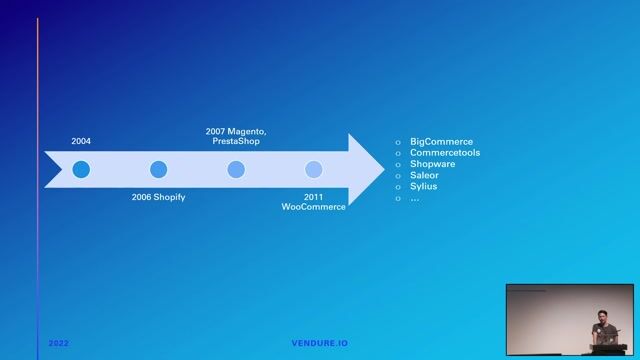
03:57 MIN
Why JavaScript and TypeScript dominate modern development
Modern Headless Commerce with Vendure
Unlock full access
Log in or set up an account to access this feature and more.
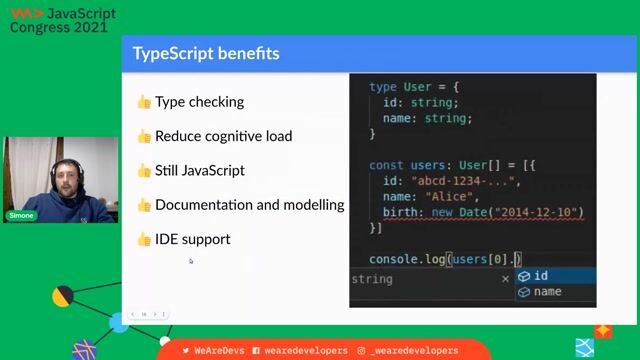
01:56 MIN
Exploring the key benefits of adopting TypeScript
Do TypeScript without TypeScript
Unlock full access
Log in or set up an account to access this feature and more.
Featured Partners
Related Videos
 43:27
43:27Do TypeScript without TypeScript
Simone Sanfratello
 32:28
32:284 Steps from JavaScript to TypeScript
Phil Nash
 37:18
37:18Building software that scales with Typescript
Tal Joffe
 31:13
31:13Lies we Tell Ourselves As Developers
Stefan Baumgartner
 29:30
29:30Where we're going we don't need JavaScript - Programming with Type Annotations
Peter Kröner
 44:31
44:31Vuejs and TypeScript- Working Together like Peanut Butter and Jelly
Rob Richardson
 29:44
29:44Don't compromise on speedy delivery nor type-safety by choosing TypeScript
Jens Claes
 43:20
43:20The Art and Craft of Type Development
Michael Hladky & Stefan Baumgartner
Related Articles
View all articles



From learning to earning
Jobs that call for the skills explored in this talk.


doinstruct Software GmbH
Berlin, Germany
Senior
GIT
JavaScript
TypeScript

Schulz.codes GmbH
Darmstadt, Germany
Intermediate
Senior
React
JavaScript
TypeScript


CELUM
Vienna, Austria
Intermediate
Java
RxJS
NoSQL
Angular
TypeScript


ELFIN Engineering and Solutions GmbH
€60-68K
Vue.js
Node.js
TypeScript
Software Architecture
+1