Stephan Gillich, Tomislav Tipurić, Christian Wiebus & Alan Southall
The Future of Computing: AI Technologies in the Exascale Era
#1about 3 minutes
Defining exascale computing and its relevance for AI
Exascale computing, originating from high-performance computing benchmarks, offers massive floating-point operation capabilities that are highly relevant for training large AI models.
#2about 4 minutes
Comparing GPU and CPU architectures for deep learning
GPUs excel at AI tasks due to their specialized, parallel processing of matrix operations, while CPUs are being enhanced with features like Advanced Matrix Extensions to also handle these workloads.
#3about 2 minutes
Implementing machine learning on resource-constrained edge devices
Machine learning is becoming essential on edge devices to improve data quality and services, requiring specialized co-processors to achieve performance within strict power budgets.
#4about 4 minutes
Addressing the growing power consumption of AI computing
The massive energy demand of data centers for AI training is a major challenge, addressed by improving grid-to-core power efficiency and offloading computation to the edge.
#5about 1 minute
Key security considerations for AI systems and edge devices
Securing AI systems involves a multi-layered approach including secure boot, safe updates, certificate management, and ensuring the trustworthiness of the AI models themselves.
#6about 5 minutes
Leveraging open software and AI for code development
Open software stacks enable hardware choice, while development tools and large language models can be used to automatically optimize code for better performance on specific platforms.
#7about 8 minutes
Exploring future computing architectures and industry collaboration
The future of computing will be shaped by power efficiency challenges, leading to innovations in materials like silicon carbide, alternative architectures like neuromorphic computing, and cross-industry partnerships.
#8about 3 minutes
Balancing distributed edge AI with centralized cloud computing
A hybrid architecture that balances local processing on the edge with centralized cloud resources is the most practical approach for AI, optimizing for latency, power, and data privacy based on the specific use case.
Related jobs
Jobs that call for the skills explored in this talk.


Matching moments
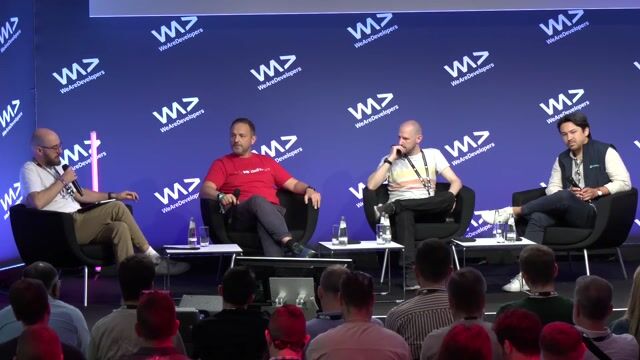
02:40 MIN
Lightning round on future skills and AI trends
The AI-Ready Stack: Rethinking the Engineering Org of the Future
Unlock full access
Log in or set up an account to access this feature and more.
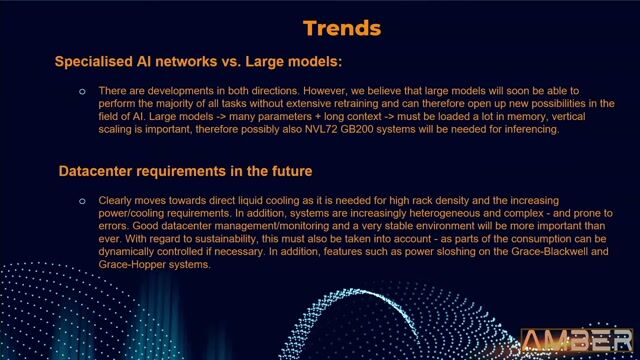
02:51 MIN
Future trends in AI models and data center cooling
AI Factories at Scale
Unlock full access
Log in or set up an account to access this feature and more.

05:50 MIN
The future of computing requires scaling out to data centers
Coffee with Developers - Stephen Jones - NVIDIA
Unlock full access
Log in or set up an account to access this feature and more.
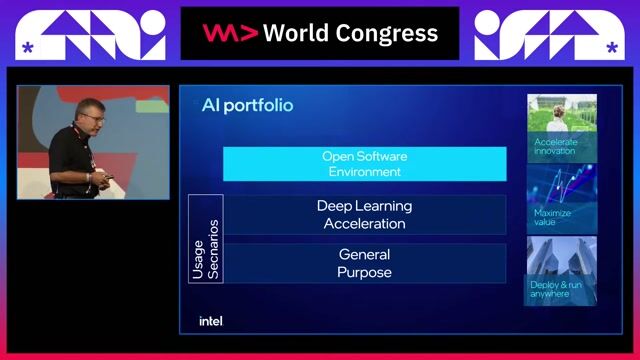
03:19 MIN
Choosing the right hardware for different AI workloads
Bringing AI Everywhere
Unlock full access
Log in or set up an account to access this feature and more.

02:06 MIN
Managing AI's energy consumption with sustainable infrastructure
How to build a sovereign European AI compute infrastructure
Unlock full access
Log in or set up an account to access this feature and more.
03:25 MIN
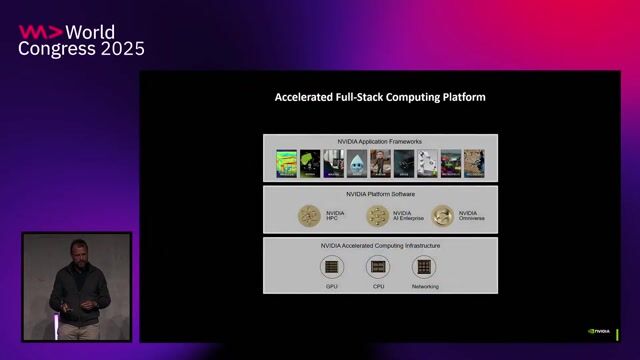
Achieving massive energy efficiency in AI compute
Pioneering AI Assistants in Banking
Unlock full access
Log in or set up an account to access this feature and more.
03:08 MIN
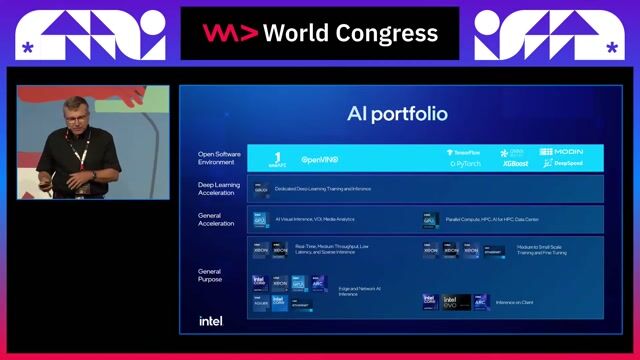
Enabling hybrid AI with an open software stack
Bringing AI Everywhere
Unlock full access
Log in or set up an account to access this feature and more.
02:33 MIN
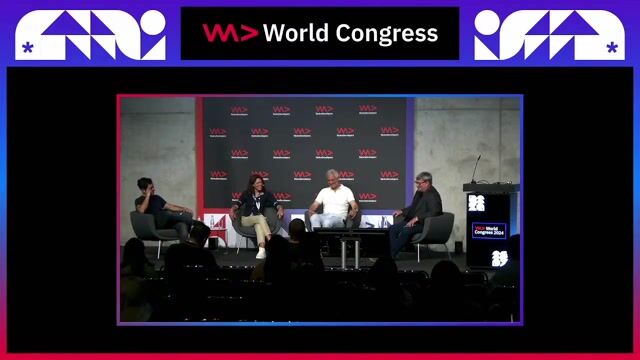
Panelists' wishes for future AI capabilities
The Future of Developer Experience with GenAI: Driving Engineering Excellence
Unlock full access
Log in or set up an account to access this feature and more.
Featured Partners
Related Videos
 26:25
26:25Bringing AI Everywhere
Stephan Gillich
 29:36
29:36How to build a sovereign European AI compute infrastructure
Markus Hacker, Daniel Abbou, Rosanne Kincaid-Smith & Michael Bradley
 32:46
32:46Architecting the Future: Leveraging AI, Cloud, and Data for Business Success
Tomislav Tipurić, Christian Ertler, Marc Binder & Karin Janina Schweizer
 22:07
22:07WWC24 - Ankit Patel - Unlocking the Future Breakthrough Application Performance and Capabilities with NVIDIA
Ankit Patel
 24:26
24:26AI Factories at Scale
Thomas Schmidt
 29:52
29:52Your Next AI Needs 10,000 GPUs. Now What?
Anshul Jindal & Martin Piercy
 29:50
29:50Trends, Challenges and Best Practices for AI at the Edge
Ekaterina Sirazitdinova
 24:07
24:07WWC24 - Beyond the Hype: Real-World AI Strategies Panel
Mike Butcher, Jürgen Müller, Katrin Lehmann & Tobias Regenfuss
Related Articles
View all articles



From learning to earning
Jobs that call for the skills explored in this talk.


BWI GmbH
Senior
Linux
DevOps
Ansible
Terraform
Kubernetes
Ai-driven
EXXETA AG
Docker
FastAPI
TypeScript
Kubernetes
Software Architecture
EXXETA AG
Docker
FastAPI
TypeScript
Kubernetes
Software Architecture