Tatiana Chervova
Is reactive the new black? Imperative vs. reactive programming with Quarkus
#1about 2 minutes
Discovering reactive programming through a modern Quarkus project
A real-world project using Quarkus and a modern tech stack serves as the motivation for exploring the challenges and benefits of reactive programming.
#2about 1 minute
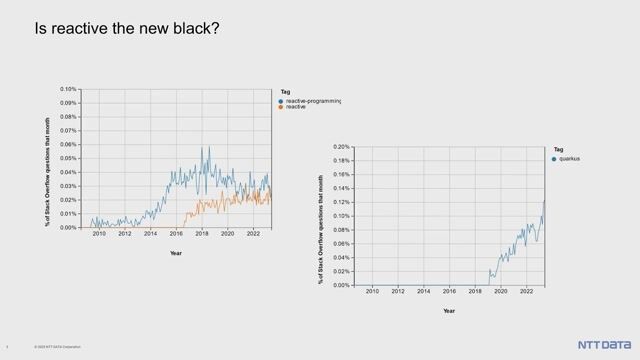
Examining the trend and debate around reactive programming
Reactive programming is a growing trend seen in conference talks and online forums, but developers hold opposing views on its complexity and practical adoption.
#3about 2 minutes
Contrasting imperative, declarative, and reactive code styles
Reactive programming is a form of declarative dataflow programming that focuses on 'what' to do, differing from the step-by-step 'how' of imperative code.
#4about 2 minutes
Meeting modern application demands with the Reactive Manifesto
The Reactive Manifesto outlines the principles of responsive, resilient, elastic, and message-driven systems needed to handle today's high-concurrency and large-scale data requirements.
#5about 4 minutes
Understanding blocking vs non-blocking I/O for requests
The imperative model uses a blocking thread-per-request approach, while the reactive model uses a non-blocking event loop to handle many concurrent requests with few threads.
#6about 3 minutes
Treating data and user inputs as asynchronous streams
In reactive programming, everything from variables to user inputs can be treated as an asynchronous stream of events, which can emit values, failures, or a completion signal.
#7about 4 minutes
Managing data flow with the backpressure mechanism
Backpressure is a key reactive concept where the consumer controls the data flow by signaling to the publisher how many items it is ready to process, preventing overload.
#8about 2 minutes
Deconstructing a reactive stream pipeline in Mutiny
A code walkthrough demonstrates how Mutiny's `multi` and `uni` types create and transform data streams, which only execute upon subscription.
#9about 2 minutes
Evaluating the advantages and disadvantages of reactive code
Reactive programming offers better performance and code locality but introduces challenges like a steep learning curve, a significant mindset shift, and complex debugging.
#10about 2 minutes
Identifying when to use imperative vs reactive approaches
Choose the imperative model for self-contained, CPU-intensive tasks and the reactive model for applications with high concurrency or real-time user interfaces.
#11about 1 minute
Unifying imperative and reactive code with Quarkus
Quarkus provides a hybrid model with a reactive core that allows developers to write traditional imperative code, automatically managing the execution on the appropriate thread.
#12about 2 minutes
Summarizing key takeaways and team onboarding strategies
Key lessons include aligning the programming approach with application and team needs, and effectively onboarding new developers by pairing them with experienced engineers.
Related jobs
Jobs that call for the skills explored in this talk.


Matching moments
03:03 MIN
Improving performance with reactive programming and Quarkus
Application Modernization and Rabbits
Unlock full access
Log in or set up an account to access this feature and more.
05:28 MIN
Exploring the Quarkus reactive technology stack
Development of reactive applications with Quarkus
Unlock full access
Log in or set up an account to access this feature and more.
05:38 MIN
Implementing the flow with a reactive programming stack
Maximising Cassandra's Potential: Tips on Schema, Queries, Parallel Access, and Reactive Programming
Unlock full access
Log in or set up an account to access this feature and more.
02:47 MIN
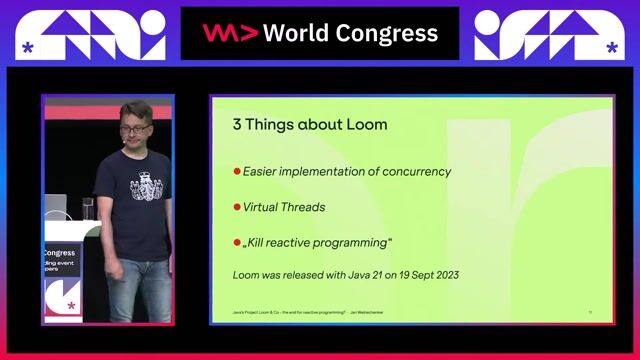
The core principles of reactive programming
Java's Project Loom & Co - the end for reactive programming?
Unlock full access
Log in or set up an account to access this feature and more.
05:27 MIN
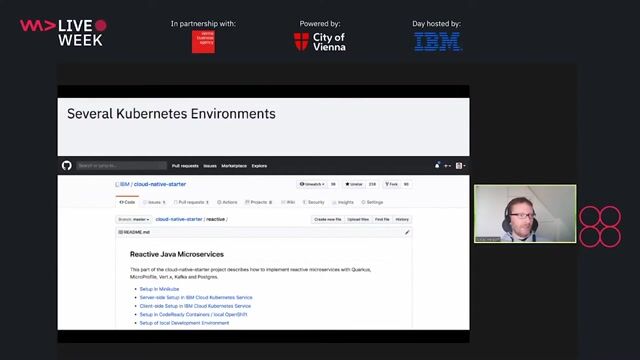
Deploying reactive apps and key takeaways
Development of reactive applications with Quarkus
Unlock full access
Log in or set up an account to access this feature and more.

04:11 MIN
Comparing reactive and imperative code performance
Development of reactive applications with Quarkus
Unlock full access
Log in or set up an account to access this feature and more.
08:27 MIN
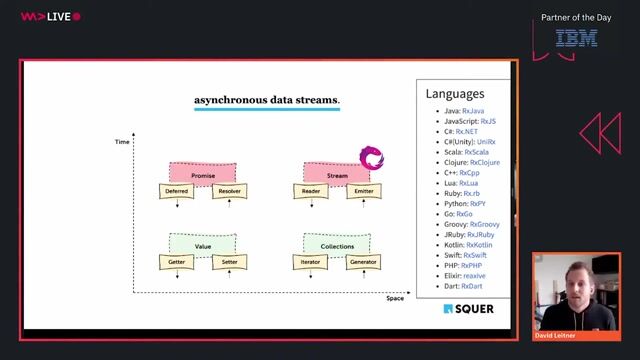
Exploring the core principles of reactive programming
Rethinking Reactive Architectures with GraphQL
Unlock full access
Log in or set up an account to access this feature and more.
02:13 MIN
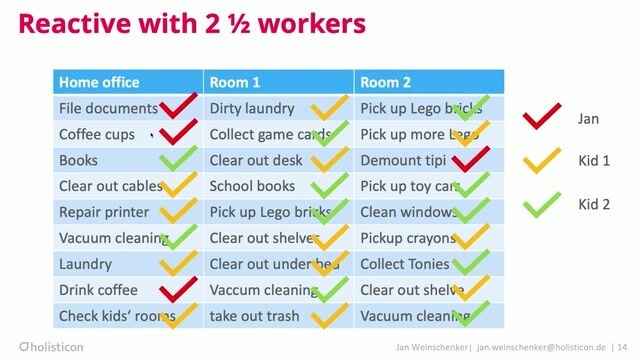
Exploring reactive Java frameworks and adoption challenges
Side-by-Side: Reactive vs non-reactive Java
Unlock full access
Log in or set up an account to access this feature and more.
Featured Partners
Related Videos
 46:24
46:24The Rise of Reactive Microservices
David Leitner
 41:06
41:06Rethinking Reactive Architectures with GraphQL
David Leitner
 30:59
30:59Qwik: Making sure that easy is same as performant
Miško Hevery
 39:10
39:10Development of reactive applications with Quarkus
Niklas Heidloff
 30:43
30:43Coroutine explained yet again 60 years later
Mikhail Maslo
 25:41
25:41Side-by-Side: Reactive vs non-reactive Java
Jan Weinschenker
 44:40
44:40Quarkus. A Bliss for developers
Alex Soto
 30:40
30:40What the heck do "declarative" and "reactive" actually mean?
André Kovac
Related Articles
View all articles

.jpg?w=240&auto=compress,format)

From learning to earning
Jobs that call for the skills explored in this talk.


Haufe-Lexware GmbH & Co. KG
Freiburg im Breisgau, Germany
Intermediate
Senior
Java
React
TypeScript

Schulz.codes GmbH
Darmstadt, Germany
Intermediate
Senior
React
JavaScript
TypeScript

Nia Health GmbH
Berlin, Germany
Intermediate
Senior
CSS
GIT
React
TypeScript

Buhck Umweltservices GmbH & Co. KG
Reinbek, Germany
Senior
Java
React


Die Socialisten
Vienna, Austria
Senior
Jest
React
Redux
JavaScript


Akros Ag
Junior
Docker
Jenkins
Openshift
Kubernetes
Microservices
+1
Akros Ag
Junior
Docker
Jenkins
Openshift
Kubernetes
Microservices
+1
Akros Ag
Junior
Docker
Jenkins
Openshift
Kubernetes
Microservices
+1