Roland Grabner
How to boost your brain power - Insights from cognitive neuroscience.
#1about 2 minutes
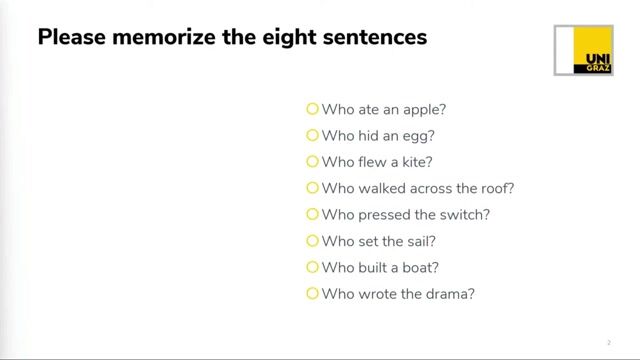
Testing the limits of your working memory
A simple memory test reveals the surprisingly small capacity of human working memory, which is the bottleneck for conscious information processing.
#2about 2 minutes
A scientific framework for evaluating brain boosting methods
Effect sizes like Cohen's d provide a statistical measure to objectively assess the actual effectiveness of any neuroenhancement technique.
#3about 4 minutes
The myth of brain training for general cognitive improvement
While brain training makes you better at specific tasks, research shows these skills do not transfer to general cognitive abilities like reasoning or planning.
#4about 2 minutes
Examining the real effectiveness of smart drugs
Smart drugs like Ritalin, developed for neurological disorders, show only small cognitive benefits for healthy individuals and come with significant side effects.
#5about 3 minutes
Why electrical brain stimulation is not a magic bullet
Transcranial electrical stimulation has a very small overall effect and may only be beneficial when brain activity is already outside an optimal range.
#6about 4 minutes
The key to brain power is connecting to long-term memory
Instead of trying to expand working memory, the most effective strategy is to efficiently use its capacity by linking new information to existing knowledge.
#7about 1 minute
Brain hack one: Actively build knowledge connections
Deliberately creating connections between new information and existing knowledge through methods like mind mapping significantly boosts learning and performance.
#8about 2 minutes
Brain hack two: Improve focus by practicing monotasking
Multitasking severely reduces cognitive performance by splitting limited working memory capacity, so dedicating focus to a single task is a powerful enhancer.
#9about 6 minutes
Brain hack three: Use downtime for memory consolidation
Giving your brain periods of rest without new input allows it to strengthen knowledge connections and fosters the emergence of creative ideas.
Related jobs
Jobs that call for the skills explored in this talk.


Matching moments

02:00 MIN
Introducing neuro UX and brain activity in design
The irresistible UX: the psychology of brainwaves and clickbait
Unlock full access
Log in or set up an account to access this feature and more.
11:32 MIN
Key psychological theories of the autistic brain
Autism in Tech
Unlock full access
Log in or set up an account to access this feature and more.
03:31 MIN
Previewing the "AI or knockout" conference talk
From Learning to Leading: Why HR Needs a ChatGPT License
Unlock full access
Log in or set up an account to access this feature and more.
02:39 MIN
Core psychological principles for an irresistible UX
The irresistible UX: the psychology of brainwaves and clickbait
Unlock full access
Log in or set up an account to access this feature and more.
07:22 MIN
How executive functioning impacts coding and tech adoption
Autism in Tech
Unlock full access
Log in or set up an account to access this feature and more.

05:21 MIN
Using human knowledge to overcome AI's limitations
Collaborative Intelligence: The Human & AI Partnership
Unlock full access
Log in or set up an account to access this feature and more.
01:43 MIN
How mobbing creates focus and high-performing teams
Remote Mob Programming - At home, but not alone
Unlock full access
Log in or set up an account to access this feature and more.

02:40 MIN
Lightning round on future skills and AI trends
The AI-Ready Stack: Rethinking the Engineering Org of the Future
Unlock full access
Log in or set up an account to access this feature and more.
Featured Partners
Related Videos
 27:24
27:24Coding and Mental Illness. A Survival Guide
Chris Ward
 59:00
59:00One size fits all! Not at all!
Ixchel Ruiz
 31:12
31:12But, you're not Facebook
Kristijan Ristovski
 1:06:16
Communication & Influence for Techies - An unconventional look at conversations
Sumit Gupta
 26:35
26:35How to Optimize Non-Coding Time
Yishai Beeri
 25:50
25:50The irresistible UX: the psychology of brainwaves and clickbait
Dora Makszy
 31:14
31:14The Neuro-Architecture of Productivity: How Work Environments Impact Cognitive Performance
Rudi Bauer & Elena de Kan
 30:36
30:36In-Memory Computing - The Big Picture
Markus Kett
Related Articles
View all articles.webp?w=240&auto=compress,format)


From learning to earning
Jobs that call for the skills explored in this talk.


Neural Concept
Lausanne, Switzerland
Machine Learning
Leuven MindGate
Leuven, Belgium
NeuroNation
Berlin, Germany