Stefan Priebsch
Seven Myths, Three Reasons, One Goal
#1about 9 minutes
Viewing your IT landscape as an evolving city
The history of Alexandria illustrates how software systems, like cities, are built on existing foundations and evolve over time.
#2about 5 minutes
Why legacy code is so difficult to understand
Legacy code often fails to communicate business intent and lacks automated tests, leading to a system nobody fully comprehends.
#3about 3 minutes
How successful software outgrows its original purpose
Legacy software often becomes a victim of its own success, as its original design cannot support exponential growth or business pivots.
#4about 3 minutes
The critical problem of ownership and technical debt
A lack of clear ownership and the anti-pattern of putting technical debt in the product backlog prevents legacy systems from aligning with corporate strategy.
#5about 3 minutes
Questioning the default need for a REST API
A REST API is not a universal solution and can lead to awkward command implementations or a distributed monolith.
#6about 3 minutes
The myth that a new technology is always better
Rewriting software in a new technology often just replaces known problems with unknown ones without providing immediate business value.
#7about 4 minutes
Why you don't need to rewrite everything at once
Instead of a full rewrite, you can add new software for specific use cases and use routing to gradually replace the legacy system.
#8about 3 minutes
Moving beyond the default relational database
Embrace polyglot persistence by choosing the right data store for each use case and defining a single canonical source of truth.
#9about 4 minutes
The misconception that software migration is expensive
Migration costs are often inflated by unnecessary cleanup; focus first on making the existing code work in the new environment.
#10about 6 minutes
Why heavy abstraction is not needed in microservices
Small, self-contained systems can be rewritten easily, making extensive abstraction layers an unnecessary source of complexity.
#11about 2 minutes
How to introduce new patterns like event sourcing
New architectural patterns can be introduced incrementally for new features, building bridges to the legacy system without a full rewrite.
Related jobs
Jobs that call for the skills explored in this talk.


Matching moments
03:05 MIN
The pervasive challenge of working with legacy software
Grappling With Clunky Old Software? Start by Understanding What’s Inside!
Unlock full access
Log in or set up an account to access this feature and more.

04:24 MIN
The challenge of justifying legacy system improvements
Data Science on Software Data
Unlock full access
Log in or set up an account to access this feature and more.
05:07 MIN
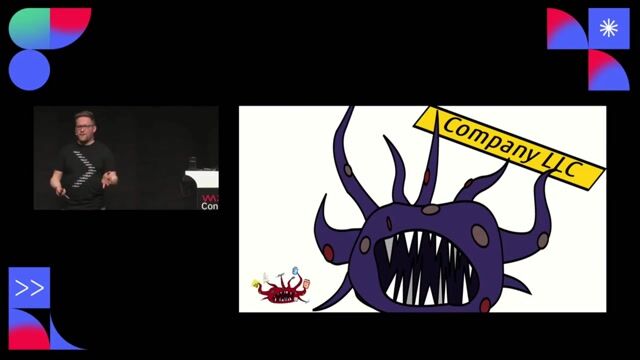
How good intentions lead to broken legacy projects
Defeat that legacy monster! Guerilla refactoring with web standards
Unlock full access
Log in or set up an account to access this feature and more.
03:27 MIN
Why developers struggle to prioritize maintenance work
Coffee with Developers - Robby Russell
Unlock full access
Log in or set up an account to access this feature and more.
01:51 MIN
Understanding the nature of legacy project monsters
Defeat that legacy monster! Guerilla refactoring with web standards
Unlock full access
Log in or set up an account to access this feature and more.
04:26 MIN
Transforming legacy systems like renovating old buildings
Domain-Driven Transformation—How to Bring (Back) Sustainable Architecture to Legacy and Monoliths
Unlock full access
Log in or set up an account to access this feature and more.

08:14 MIN
Lessons from legacy systems and risky projects
IoT: The road to sustainability
Unlock full access
Log in or set up an account to access this feature and more.
02:29 MIN
Three core challenges in modern software development
Kalo: From Code Chaos to One-Click Polyglot Codegen
Unlock full access
Log in or set up an account to access this feature and more.
Featured Partners
Related Videos
 39:49
39:49Antipatterns - nemesis of software development
Mustafa Toroman
 58:52
58:52Get ready for new features - the legacy challenge
Hans Hosea Schäfer
 21:39
21:39Unveiling the Dark Side: Navigating the Pitfalls of Digital Ambitions
Johannes Hansen
 24:52
24:52We (don't) need a software architect!?!
Hendrik Lösch
 43:00
43:00Shipping Quality Software In Hostile Environments
Luka Kladaric
 42:02
42:02Move fast with Software Architecture
Simon Lasselsberger
 28:17
28:17Why (most) software projects fail silently...
Hendrik Lösch
 25:25
25:25Defeat that legacy monster! Guerilla refactoring with web standards
Peter Kröner
Related Articles
View all articles


From learning to earning
Jobs that call for the skills explored in this talk.


Detlev Louis Motorrad-Vertriebsgesellschaft
Hamburg, Germany
Intermediate
Senior
PHP
AJAX





Peter Park System GmbH
München, Germany
Senior
Python
Docker
Node.js
JavaScript


Saby Company
Delebio, Italy
Senior
Zend
Slim
Scrum
Kanban
Symfony
