Hendrik Lösch
Why (most) software projects fail silently...
#1about 2 minutes
Defining silent failure in software projects
Projects often fail from the very beginning due to accumulating issues, not from a single catastrophic event.
#2about 4 minutes
Translating software's unique properties for stakeholders
The intangible and complex nature of software, such as its replicability and changeability, creates a communication gap between developers and business stakeholders.
#3about 3 minutes
Balancing short-term features with long-term maintainability
Prioritizing rapid feature delivery without considering maintainability leads to increasing costs of change over the software's lifecycle.
#4about 4 minutes
The difference between restructuring and refactoring
Large-scale restructuring is a multi-year strategic effort to fix deep architectural issues, unlike small, incremental refactoring.
#5about 1 minute
Identifying non-technical debt in software projects
Technical debt is often a symptom of deeper issues like requirements debt, documentation debt, and testing debt.
#6about 6 minutes
Navigating the complete software product lifecycle
Software evolves through distinct phases including initial development, evolution, and servicing, each requiring different types of investment.
#7about 3 minutes
Overcoming cognitive biases in technical decision-making
Developers must be aware of survivorship, selection, and confirmation biases to avoid making flawed architectural and technology choices.
#8about 2 minutes
Aligning architecture with non-functional requirements
Architectural choices like microservices should be driven by specific quality attributes like scalability or reliability, not by industry trends.
#9about 2 minutes
Taking ownership to improve project outcomes
Developers can prevent silent failure by refusing to negotiate on code quality, integrating testing as a core practice, and consistently asking why.
Related jobs
Jobs that call for the skills explored in this talk.


Matching moments

02:24 MIN
Why bad software is a communication problem
What makes a great Software Engineer? Challenging our Assumptions Instead of Talking about Imposter Syndrome
Unlock full access
Log in or set up an account to access this feature and more.
03:35 MIN
Bridging the communication gap between stakeholders
We (don't) need a software architect!?!
Unlock full access
Log in or set up an account to access this feature and more.

05:19 MIN
Understanding the business impact of software quality
Modern software architectures
Unlock full access
Log in or set up an account to access this feature and more.
05:07 MIN
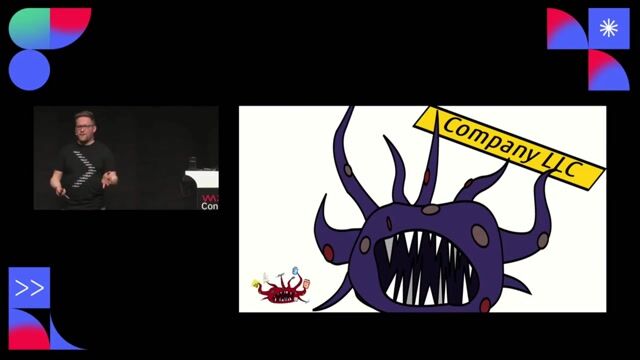
How good intentions lead to broken legacy projects
Defeat that legacy monster! Guerilla refactoring with web standards
Unlock full access
Log in or set up an account to access this feature and more.
02:34 MIN
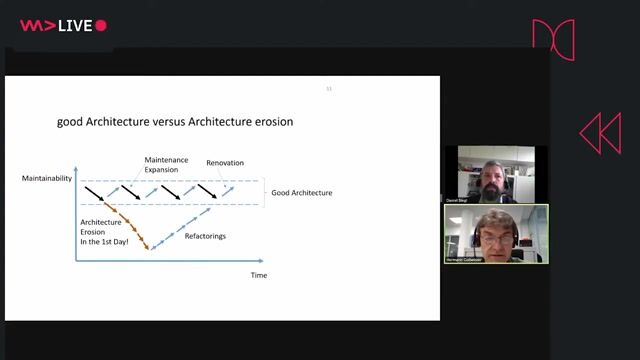
Addressing the challenge of growing software complexity
Model Based Systems Engineering in an Agile Product Development Process
Unlock full access
Log in or set up an account to access this feature and more.

01:58 MIN
What we can learn from high-profile software failures
The Software Bug All Stars - and what we can learn from them
Unlock full access
Log in or set up an account to access this feature and more.

06:16 MIN
Why code-centric development becomes fragile and hard to maintain
The Power of Prompting with AI Native Development - Simon Maple
Unlock full access
Log in or set up an account to access this feature and more.

04:24 MIN
The challenge of justifying legacy system improvements
Data Science on Software Data
Unlock full access
Log in or set up an account to access this feature and more.
Featured Partners
Related Videos
 24:52
24:52We (don't) need a software architect!?!
Hendrik Lösch
 24:38
24:38Resolving technical debts in software architecture
Carola Lilienthal
 43:00
43:00Shipping Quality Software In Hostile Environments
Luka Kladaric
 28:28
28:28Breaking the Hardware Mindset: Overcoming Barriers to System-Level Innovation
Réka Leisztner
 29:03
29:03How to sabotage your software development with agile? – 10 pro tips for guaranteed success
Marlene Roth & Tobias Mohr
 26:22
26:22Modern software architectures
David Tielke
 46:48
46:48Seven Myths, Three Reasons, One Goal
Stefan Priebsch
 27:27
27:27The Software Bug All Stars - and what we can learn from them
Christian Seifert
Related Articles
View all articles

.png?w=240&auto=compress,format)

From learning to earning
Jobs that call for the skills explored in this talk.


Sfs Group Schweiz Ag
Remote
Gitlab
TypeScript
Data analysis
Microsoft Access
Sfs Group Schweiz Ag
Remote
Gitlab
TypeScript
Data analysis
Microsoft Access