Dr. Andreas Kaldun
More efficient software for more efficient microchips
#1about 3 minutes
Introduction to software's role at a hardware company
Zeiss provides hardware for various industries, from medical devices to semiconductor manufacturing, where software plays a critical role.
#2about 5 minutes
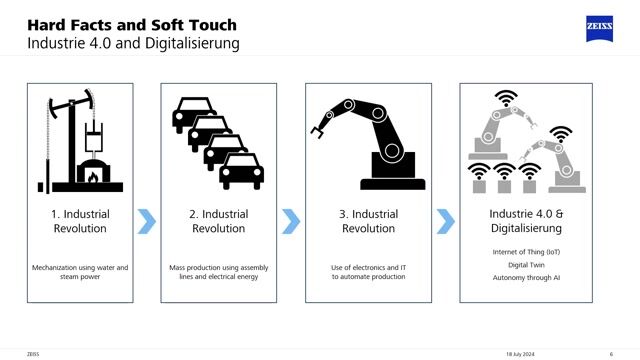
Understanding the shift from Industry 3.0 to 4.0
The transition from automated assembly lines to interconnected systems like IoT and digital twins creates new challenges for accessing data from legacy hardware.
#3about 2 minutes
The cultural clash between hardware engineers and software developers
Hardware engineering's established standards and physical constraints often conflict with the agile, remote-friendly culture of modern software development.
#4about 4 minutes
Contrasting software and hardware development lifecycles
Software's rapid release cycles conflict with hardware's long lifecycles, where products like factories can operate for decades with infrequent updates.
#5about 2 minutes
Finding the source of truth in hardware projects
Unlike software's focus on customer value, hardware-centric projects must treat the hardware itself as the primary source of truth and value.
#6about 3 minutes
Navigating agile methods in a regulated hardware environment
Agile practices must be adapted to meet the strict compliance, documentation, and waterfall-style processes required for regulated industries like medical devices.
#7about 5 minutes
Adapting quality assurance for hardware-dependent software
Testing software for hardware requires moving beyond standard tools to use physical testbeds, certified procedures, and custom-built simulations.
#8about 3 minutes
Solutions for bridging the hardware and software divide
Effective collaboration requires mutual respect, shared quality ownership, adopting modern tools like Git, and proactive communication between engineering and development teams.
#9about 3 minutes
Q&A on virtual commissioning and industry examples
The discussion covers the role of hardware-in-the-loop simulation, the high cost of creating digital twins, and the importance of management buy-in.
Related jobs
Jobs that call for the skills explored in this talk.


Matching moments
03:06 MIN
The challenge of aligning long hardware and short software cycles
Coffee with Developers - Stephen Jones - NVIDIA
Unlock full access
Log in or set up an account to access this feature and more.
28:42 MIN
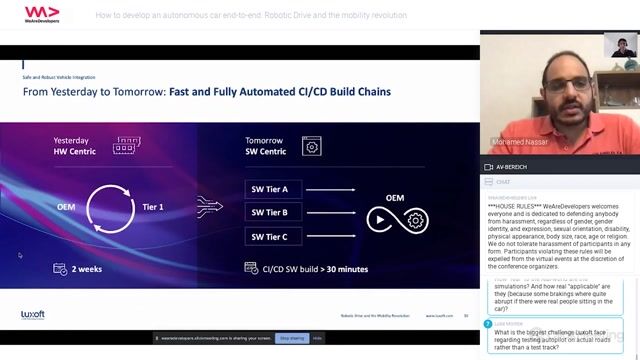
The automotive industry's shift to software-centric development
How to develop an autonomous car end-to-end: Robotic Drive and the mobility revolution
Unlock full access
Log in or set up an account to access this feature and more.
03:13 MIN
Focusing on system outcomes over hardware features
Breaking the Hardware Mindset: Overcoming Barriers to System-Level Innovation
Unlock full access
Log in or set up an account to access this feature and more.
02:22 MIN
The challenge of building next-generation CPUs
The Billion Dollar Machine: First Time Right.
Unlock full access
Log in or set up an account to access this feature and more.
08:04 MIN
Exploring future computing architectures and industry collaboration
The Future of Computing: AI Technologies in the Exascale Era
Unlock full access
Log in or set up an account to access this feature and more.
03:12 MIN
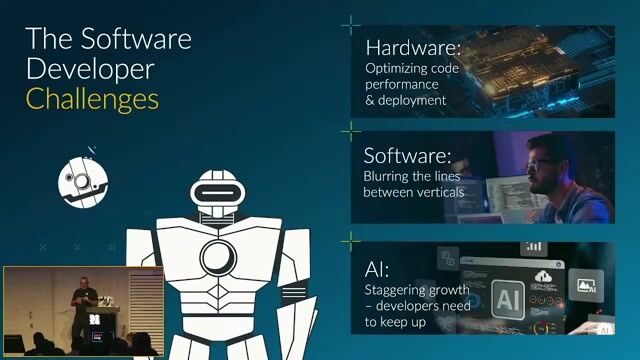
Addressing the complexity of modern software development on Arm
Unleashing the Full Potential of the Arm Architecture – Write Once, Deploy Anywhere
Unlock full access
Log in or set up an account to access this feature and more.
02:52 MIN
Redefining the product in the digital era
Breaking the Hardware Mindset: Overcoming Barriers to System-Level Innovation
Unlock full access
Log in or set up an account to access this feature and more.
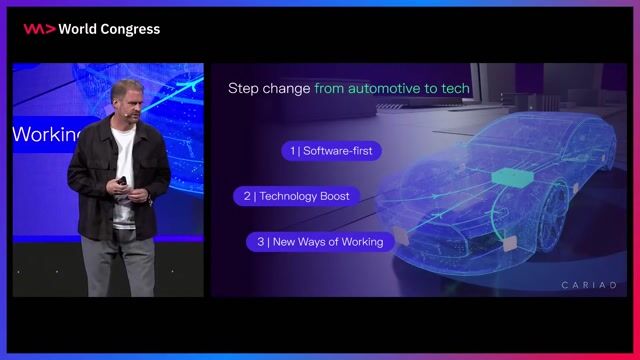
06:33 MIN
Shifting from a hardware-first to a software-first mindset
Software defines the vehicle: Why customers and developers will love cars even more
Unlock full access
Log in or set up an account to access this feature and more.
Featured Partners
Related Videos
 30:29
30:29Strange New Worlds: shaping the future of the digital age
Andreas Kaldun
 30:03
30:03The Billion Dollar Machine: First Time Right.
Dr. Andreas Kaldun
 28:28
28:28Breaking the Hardware Mindset: Overcoming Barriers to System-Level Innovation
Réka Leisztner
 28:17
28:17Why (most) software projects fail silently...
Hendrik Lösch
 41:06
41:06From Monolith Tinkering to Modern Software Development
Lars Gentsch
 43:00
43:00Shipping Quality Software In Hostile Environments
Luka Kladaric
 25:29
25:29Smart, Connected, Unexpected: The Wild Side of IoT and AI
Pawel Skiba
 29:07
29:07Times of (climate) crisis - How and why sustainable software is a must!
Hendrik Lösch
Related Articles
View all articles


From learning to earning
Jobs that call for the skills explored in this talk.


SIEB & MEYER AG
Inova Semiconductors Gmbh
Remote
GIT
Software Architecture
Continuous Integration
matchING GmbH
FERCHAU GmbH