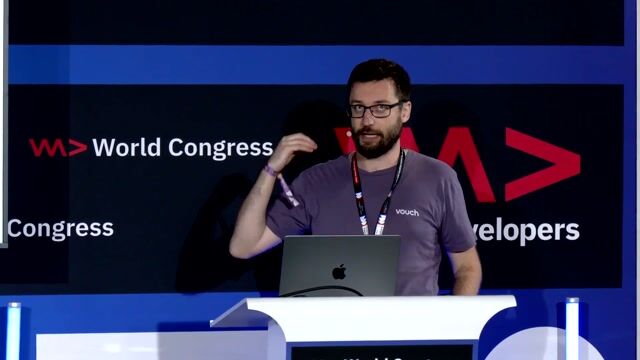
Julian Burr
Quantum Computing for Classical Developers
#1about 2 minutes
Quantum computing as an enhancement, not a replacement
Quantum computers should be viewed as Quantum Processing Units (QPUs) that enhance classical computers for specific tasks, similar to GPUs.
#2about 2 minutes
Understanding the difference between classical bits and qubits
While classical bits store a single value of zero or one, quantum bits (qubits) can exist in a superposition of both states simultaneously.
#3about 3 minutes
Explaining superposition using the double-slit experiment
The double-slit experiment demonstrates how particles can behave as both waves and particles, illustrating the concept of superposition and the observer effect.
#4about 1 minute
Using interference to find the right answer
The true power of quantum algorithms lies in manipulating quantum states to make correct answers constructively interfere while incorrect answers destructively interfere.
#5about 1 minute
The concept of quantum entanglement
Entanglement connects two particles so their states are correlated regardless of distance, which helps in controlling the overall quantum state.
#6about 11 minutes
How Shor's algorithm can break RSA encryption
Shor's algorithm combines classical mathematical tricks with a quantum fourier transform to efficiently find the prime factors of large numbers, threatening RSA encryption.
#7about 2 minutes
Preparing for a post-quantum cryptography future
To counter future threats, researchers are developing post-quantum cryptography standards, such as lattice-based methods, that are resistant to quantum attacks.
#8about 2 minutes
The main challenges in building quantum computers
The primary obstacles to building large-scale quantum computers are the insufficient number of qubits and the difficulty of maintaining a stable, error-corrected quantum state.
#9about 4 minutes
Applying quantum computing to machine learning
Quantum machine learning promises to accelerate model training and handle more complex data using techniques like Grover's algorithm and quantum annealing.
#10about 3 minutes
Using quantum simulations for complex problem-solving
Quantum computers are uniquely suited to simulate complex quantum systems, enabling breakthroughs in optimization, drug discovery, and weather forecasting.
Related jobs
Jobs that call for the skills explored in this talk.


Matching moments
04:48 MIN
Understanding the fundamentals of quantum computing
Quantum computing for developers: Solving optimization problems with Qiskit
Unlock full access
Log in or set up an account to access this feature and more.

05:08 MIN
The challenge of learning quantum computing
Eclipse Qrisp: Next Generation of Quantum Algorithm Development
Unlock full access
Log in or set up an account to access this feature and more.

06:22 MIN
Achieving quantum advantage today with hybrid computing models
Quantum Tech: Preparing for the Next Leap
Unlock full access
Log in or set up an account to access this feature and more.
03:29 MIN
Exploring key use cases for quantum advantage
The Quantum Computing Future
Unlock full access
Log in or set up an account to access this feature and more.
02:40 MIN
Quantum computing's dual impact on optimization and cryptography
Architecting the Future: Leveraging AI, Cloud, and Data for Business Success
Unlock full access
Log in or set up an account to access this feature and more.
04:29 MIN
Q&A on the future and applications of quantum
What is quantum computing?
Unlock full access
Log in or set up an account to access this feature and more.
03:41 MIN
Applying quantum computing to real-world problems
The Quantum Computing Future
Unlock full access
Log in or set up an account to access this feature and more.
04:15 MIN
A brief history of quantum hardware development
Quantum DevOps - Quantum Application Development
Unlock full access
Log in or set up an account to access this feature and more.
Featured Partners
Related Videos
 30:37
30:37The Quantum Leap: Redefining Computing and Its Applications
Tomislav Tipurić
 25:46
25:46What is quantum computing?
Alex Waldherr
 30:57
30:57The Quantum Computing Future
Tomislav Tipurić, Alexander Glätzle & Jan Goetz
 43:21
43:21Schroedinger's cat: Thinking in- and outside the box of quantum mechanics
Alexandra Waldherr
 22:44
22:44Quantum DevOps - Quantum Application Development
Ilie-Daniel Gheorghe-Pop
 34:14
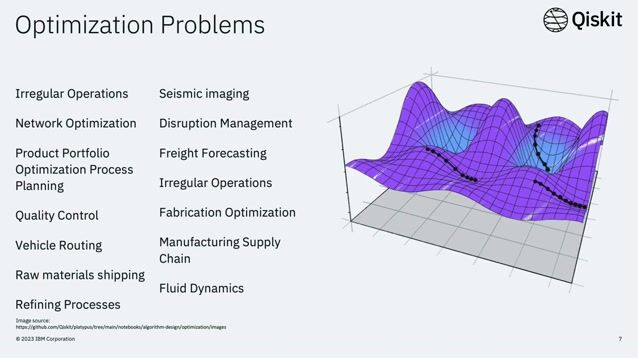
34:14Quantum computing for developers: Solving optimization problems with Qiskit
Isabell Heider & David Alber
 33:26
33:26Hands-on Journey to Quantum Computing with IBM
Jan-Rainer Lahmann
 28:26
28:26Quantum Computing - The tiny and the big challenges
Alex Waldherr
Related Articles
View all articles.webp?w=240&auto=compress,format)


From learning to earning
Jobs that call for the skills explored in this talk.


Quantum Machines
Stuttgart, Germany
Intermediate
DevOps
Ansible
Terraform
Continuous Integration
Kipu Quantum Gmbh
Karlsruhe, Germany
Remote
Senior
QuantumDiamonds GmbH
Munich, Germany
Senior
Machine Learning
Continuous Integration