Wei Hu
Fault Tolerance and Consistency at Scale: Harnessing the Power of Distributed SQL Databases
#1about 3 minutes
The evolution from key-value stores to distributed SQL
Modern distributed systems require strong consistency and a powerful query language, leading to the development of distributed SQL databases.
#2about 1 minute
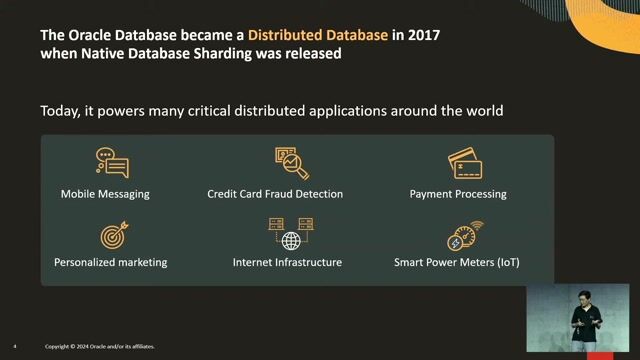
Understanding the primary use cases for distributed databases
Distributed databases primarily solve for massive internet-scale workloads and help organizations comply with data sovereignty regulations.
#3about 3 minutes
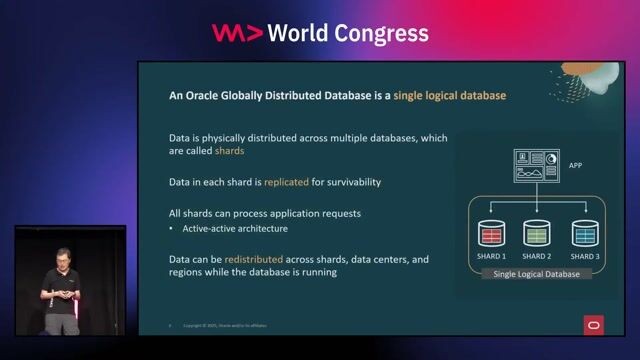
How a distributed database works under the hood
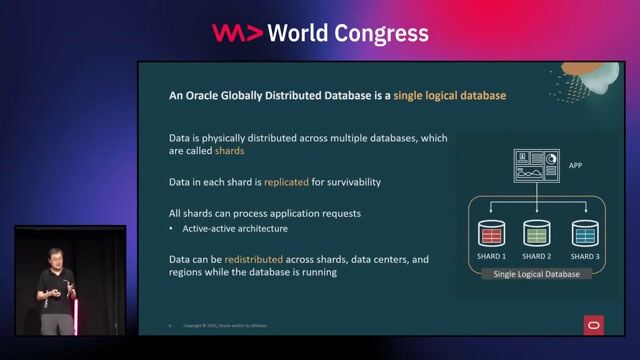
A distributed database presents a single logical view to applications while physically partitioning data into replicated, independently operating shards.
#4about 6 minutes
Choosing between distributed and clustered database architectures
Clustered databases offer the lowest latency within a data center, while distributed databases provide massive geographical scale at the cost of network latency.
#5about 4 minutes
Using database sharding to meet data sovereignty laws
A global bank implemented data sovereignty for India by sharding local customer data into a dedicated region without changing its core applications.
#6about 3 minutes
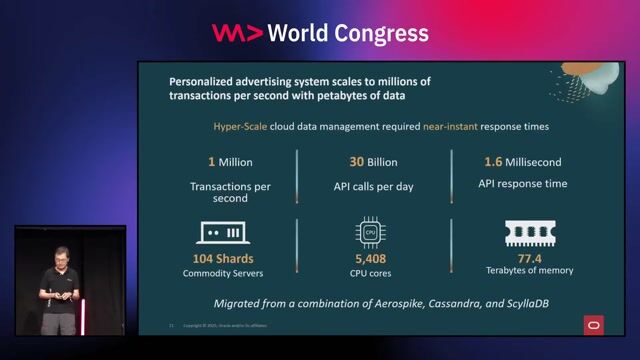
Supporting hyperscale workloads with a single database
The BlueKai platform simplified its architecture and improved performance by migrating a complex, multi-database system to a single Oracle distributed database.
#7about 5 minutes
Optimizing performance with advanced data distribution methods
Flexible data distribution methods like composite, directory-based, and duplicated tables are crucial for minimizing latency and handling data skew.
#8about 2 minutes
Building resilient systems with modern replication protocols
Using adaptive replication and the Raft consensus protocol provides extreme survivability and fast, automatic failover with zero data loss.
#9about 2 minutes
The converged database model for modern applications
A converged database supports multiple data types and workloads in a single system, simplifying development and deployment across multi-cloud and on-premise environments.
#10about 2 minutes
Key features of a modern distributed SQL database
A fully-featured distributed database combines flexible data distribution, replication, and deployment methods within a converged architecture for maximum power.
Related jobs
Jobs that call for the skills explored in this talk.


Matching moments
03:03 MIN
Understanding the fundamentals of distributed SQL databases
Fault Tolerance and Consistency at Scale: Harnessing the Power of Distributed SQL Databases
Unlock full access
Log in or set up an account to access this feature and more.
01:32 MIN
How distributed databases abstract complexity from applications
Fault Tolerance and Consistency at Scale: Harnessing the Power of Distributed SQL Databases
Unlock full access
Log in or set up an account to access this feature and more.
01:15 MIN
Achieving massive scalability and high fault tolerance
Fault Tolerance and Consistency at Scale: Harnessing the Power of Distributed SQL Databases
Unlock full access
Log in or set up an account to access this feature and more.
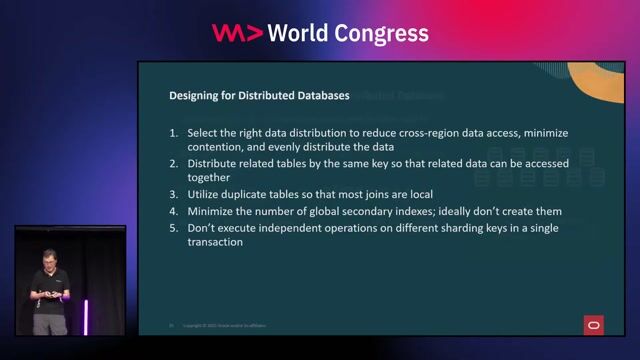
02:00 MIN
How to evaluate and choose a distributed SQL database
Fault Tolerance and Consistency at Scale: Harnessing the Power of Distributed SQL Databases
Unlock full access
Log in or set up an account to access this feature and more.
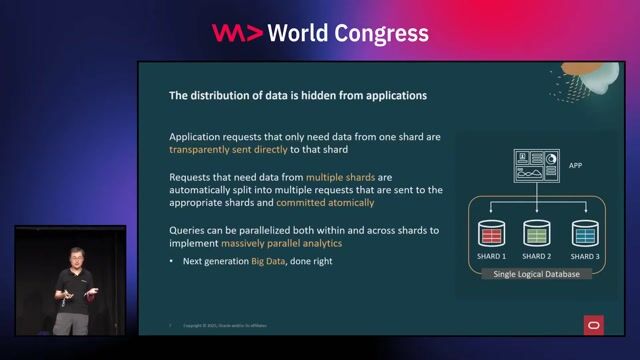
01:57 MIN
Solving data sovereignty requirements without application changes
Fault Tolerance and Consistency at Scale: Harnessing the Power of Distributed SQL Databases
Unlock full access
Log in or set up an account to access this feature and more.
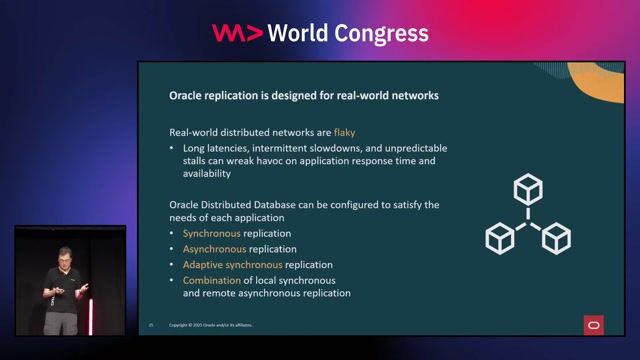
02:14 MIN
Deploying across multi-cloud to avoid vendor lock-in
Fault Tolerance and Consistency at Scale: Harnessing the Power of Distributed SQL Databases
Unlock full access
Log in or set up an account to access this feature and more.
04:17 MIN
Navigating the CAP theorem in distributed systems
Leveraging Real time data in FSIs
Unlock full access
Log in or set up an account to access this feature and more.
04:48 MIN
The power and complexity of database sharding
Scaling Databases
Unlock full access
Log in or set up an account to access this feature and more.
Featured Partners
Related Videos
 28:41
28:41Fault Tolerance and Consistency at Scale: Harnessing the Power of Distributed SQL Databases
Wei Hu
 29:27
29:27Crypto-secure Data Management with In-Database Blockchain
Wei Hu
 29:30
29:30Kubernetes and Microservices with Multi-Model Databases
Wei Hu
 21:09
21:09Scaling Databases
Tobias Petry
 26:08
26:08Durable Execution: A Revolutionary Abstraction for Building Resilient Applications
Maxim Fateev
 30:34
30:34How building an industry DBMS differs from building a research one
Markus Dreseler
 24:22
24:22Database Magic behind 40 Million operations/s
Jürgen Pilz
 46:58
46:58Distributed search under the hood
Alexander Reelsen
Related Articles
View all articles.gif?w=240&auto=compress,format)


From learning to earning
Jobs that call for the skills explored in this talk.


Interhyp Gruppe
München, Germany
Intermediate
Senior
MongoDB
Terraform
PostgreSQL


Scalefree Scalefree
Deutsche Leasing AG
Routing
Ansible
PostgreSQL
Microsoft SQL Server
Continuous Integration
Clickhouse
Remote
Intermediate
MySQL
MongoDB
PostgreSQL
Kubernetes