Manfred Steyer
Native Federation: The Future of Micro Frontends and Plugin-Systems in Angular
#1about 2 minutes
Understanding the core challenge of micro frontend integration
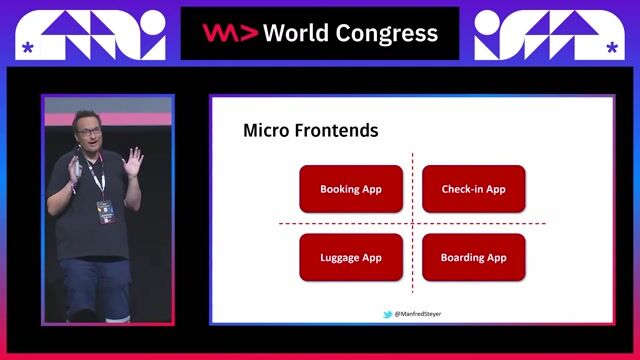
Micro frontends enable team autonomy but create a significant challenge in integrating disparate parts into a cohesive user experience at runtime.
#2about 5 minutes
The evolution from Webpack to bundler-agnostic federation
While Webpack Module Federation solved runtime integration, its dependency on Webpack is a drawback as the ecosystem moves to faster bundlers like esbuild.
#3about 4 minutes
Introducing Native Federation using web standards
Native Federation provides a bundler-agnostic solution by acting as a slim wrapper that uses web standards like ECMAScript Modules and metadata for sharing code.
#4about 6 minutes
Configuring a micro frontend and shell with Native Federation
A walkthrough of the setup process shows how to use the federation config to expose components, share dependencies, and define remote applications in a manifest file.
#5about 2 minutes
Dynamically loading a remote micro frontend in Angular
The `loadRemoteModule` helper function allows for seamlessly lazy-loading a component from a separately deployed application directly within Angular's routing configuration.
#6about 5 minutes
Combining different frameworks with the Frankenstein architecture
By wrapping different frameworks or framework versions in standard web components, you can use Native Federation to integrate them into a single application.
#7about 2 minutes
Improving performance with island architectures and deferred loading
Island architectures improve initial page load performance by rendering static HTML on the server and deferring the loading of interactive JavaScript until needed.
#8about 3 minutes
Balancing complexity and benefits in modern architectures
Adopting micro frontends or island architectures increases complexity, so it's crucial to weigh this against the required benefits like team autonomy or raw performance.
Related jobs
Jobs that call for the skills explored in this talk.


Matching moments
02:57 MIN
Integrating micro frontends with module federation
Advanced Micro Frontends: Multi-Version and Multi-Framework Scenarios
Unlock full access
Log in or set up an account to access this feature and more.
04:47 MIN
Using Webpack 5 Module Federation for micro frontends
Front-End Micro Apps
Unlock full access
Log in or set up an account to access this feature and more.
01:31 MIN
Key takeaways and resources for further learning
The Microfrontend Revolution- Using Webpack 5 Module Federation with Angular
Unlock full access
Log in or set up an account to access this feature and more.
05:28 MIN
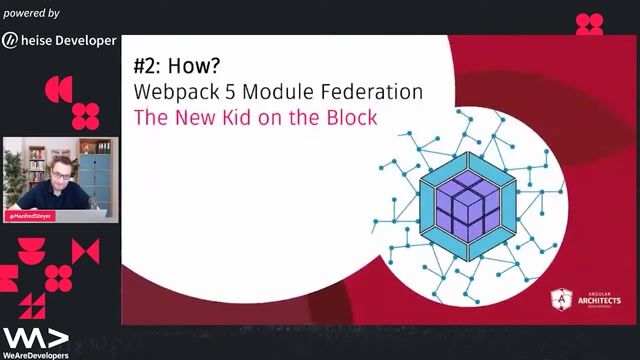
How Module Federation enables runtime integration
Micro Frontends with Module Federation: Why and How?
Unlock full access
Log in or set up an account to access this feature and more.
04:03 MIN
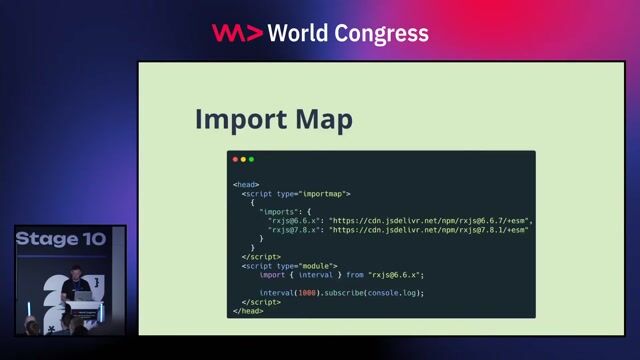
Managing dependencies with Webpack's Module Federation
The Dependency Cookbook - Recipes for Micro Frontend success
Unlock full access
Log in or set up an account to access this feature and more.
05:07 MIN
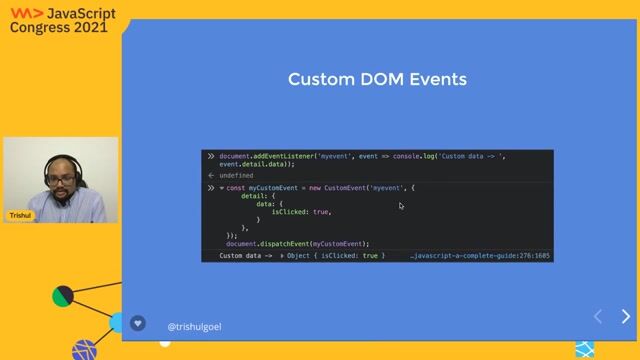
Using Webpack 5 Module Federation for implementation
Destructuring Frontend monoliths with MicroFrontends
Unlock full access
Log in or set up an account to access this feature and more.
05:24 MIN
The role of micro-frontends in scaling development teams
Micro-Frontends with Module Federation: Beyond the Basics
Unlock full access
Log in or set up an account to access this feature and more.
04:08 MIN
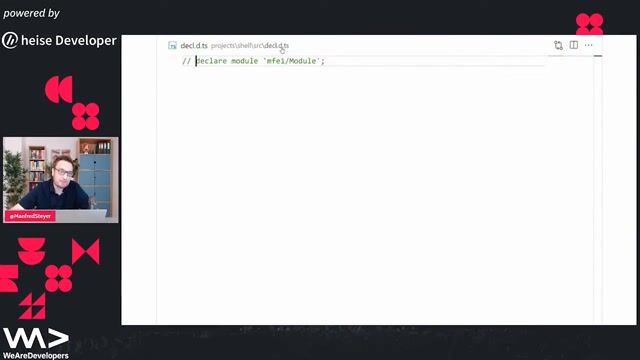
Implementing dynamic federation at runtime
Micro Frontends with Module Federation: Why and How?
Unlock full access
Log in or set up an account to access this feature and more.
Featured Partners
Related Videos
 33:18
33:18The Microfrontend Revolution- Using Webpack 5 Module Federation with Angular
Manfred Steyer
 44:35
44:35Micro-Frontends with Module Federation: Beyond the Basics
Manfred Steyer
 45:40
45:40Micro Frontends with Module Federation: Why and How?
Manfred Steyer
 24:47
24:47Advanced Micro Frontends: Multi-Version and Multi-Framework Scenarios
Manfred Steyer
 35:17
35:17Front-End Micro Apps
Serg Hospodarets
 26:00
26:00To New Frontiers: The Future of Frontend Development
Rainer Hahnekamp
 21:06
21:06The Dependency Cookbook - Recipes for Micro Frontend success
Lucas Braeschke & Stefan Bley
 43:20
43:20Microfrontends at Scale
Josh Goldberg
Related Articles
View all articles

.gif?w=240&auto=compress,format)
.png?w=240&auto=compress,format)
From learning to earning
Jobs that call for the skills explored in this talk.


doinstruct Software GmbH
Berlin, Germany
Senior
GIT
JavaScript
TypeScript

autoiXpert GmbH & Co. KG
Stuttgart, Germany
Senior
Node.js
Angular
MongoDB
TypeScript


BMS Corporate Solutions GmbH
Düsseldorf, Germany
Intermediate
Senior
CSS
HTML
Angular
TypeScript


infomax websolutions GmbH
Grassau, Germany
Senior
Vue.js
Angular
JavaScript
TypeScript

norisk Group
Munich, Germany
Intermediate
Senior
Nuxt.js
JavaScript
