
Josh Goldberg
Microfrontends at Scale
#1about 4 minutes
Understanding the problems with monolithic frontend applications
Large, aging monolithic applications suffer from slow build times, increased complexity, and code degradation over time.
#2about 2 minutes
Solving monolith problems with a microfrontend architecture
Microfrontends split a large application into smaller, independent projects to enable faster, isolated builds and deployments.
#3about 3 minutes
Routing traffic to microfrontends with edge workers
Edge computing services like Cloudflare workers can efficiently route user requests to different frontend applications based on URL paths.
#4about 5 minutes
Choosing between client-side, SSR, and static generation
Microfrontends allow you to select the optimal rendering strategy—client-side, server-side rendering (SSR), or static site generation (SSG)—for each part of your application.
#5about 1 minute
Creating a cohesive user experience with design systems
A design system provides a collection of shared visual components and standards to ensure a consistent look and feel across all microfrontend applications.
#6about 5 minutes
Organizing UI components using the atomic design methodology
Atomic design provides a clear methodology for structuring a design system by breaking down interfaces into atoms, molecules, organisms, templates, and pages.
#7about 4 minutes
Best practices for documenting a design system
Effective design systems require thorough documentation, and tools like Storybook and TypeScript can create interactive and type-safe component libraries.
#8about 4 minutes
Q&A: Maintaining consistency and choosing frameworks
This Q&A covers the challenges of coordinating design system updates and recommends frameworks like Next.js for building hybrid SSR and SSG applications.
#9about 6 minutes
Q&A: Vertical splitting, horizontal splitting, and monorepos
This Q&A explores architectural choices like vertical splitting by page versus horizontal splitting by component and discusses the benefits and complexities of using a monorepo.
#10about 8 minutes
Q&A: Managing state, component logic, and versioning
This Q&A addresses how to handle versioning, populate complex components with data, encapsulate logic, and avoid sharing state directly between microfrontends.
Related jobs
Jobs that call for the skills explored in this talk.


Matching moments
13:10 MIN
Audience Q&A on practical micro-frontend challenges
Micro-frontends anti-patterns
Unlock full access
Log in or set up an account to access this feature and more.
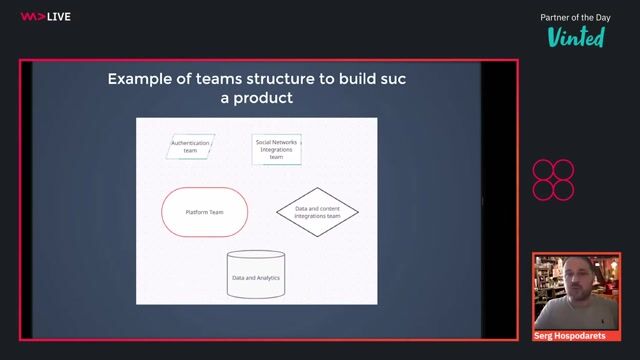
02:15 MIN
Tracing the architectural shift to micro frontends
Front-End Micro Apps
Unlock full access
Log in or set up an account to access this feature and more.
05:24 MIN
The role of micro-frontends in scaling development teams
Micro-Frontends with Module Federation: Beyond the Basics
Unlock full access
Log in or set up an account to access this feature and more.
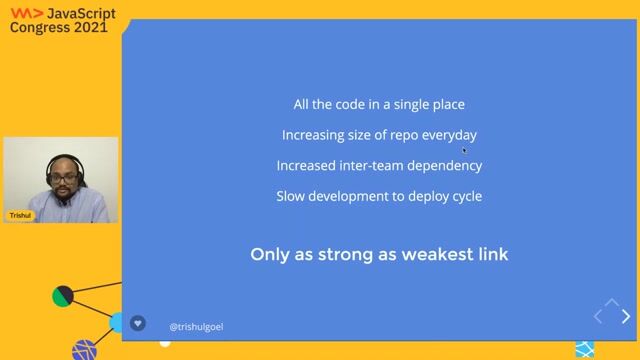
02:03 MIN
Introducing the micro-frontend architectural pattern
Destructuring Frontend monoliths with MicroFrontends
Unlock full access
Log in or set up an account to access this feature and more.
03:01 MIN
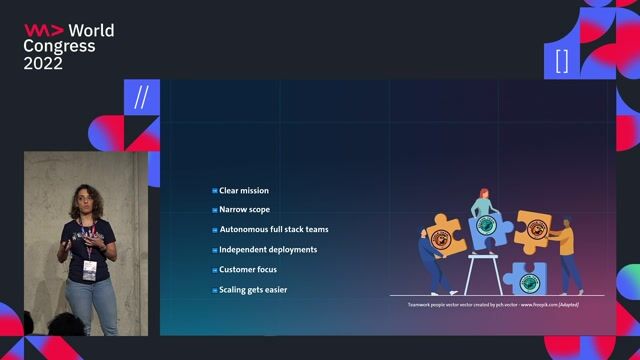
Integrating applications using a micro-frontend architecture
Building the Right Product and Building It Right: A Glimpse into Extreme Programming, Atomic Design
Unlock full access
Log in or set up an account to access this feature and more.
08:02 MIN
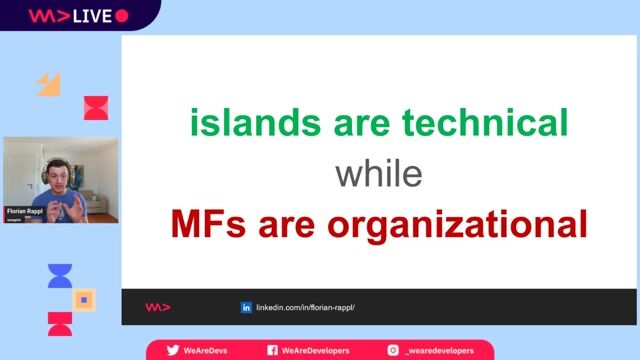
Combining micro frontends with an islands architecture
Multiple Ships to the Island - Micro Frontends & Island Architectures
Unlock full access
Log in or set up an account to access this feature and more.

06:11 MIN
Tracing the architectural evolution to microfrontends
Microfrontends with Blazor: Welcome to the Party!
Unlock full access
Log in or set up an account to access this feature and more.
04:06 MIN
The historical challenge of building micro frontends
The Microfrontend Revolution- Using Webpack 5 Module Federation with Angular
Unlock full access
Log in or set up an account to access this feature and more.
Featured Partners
Related Videos
 45:40
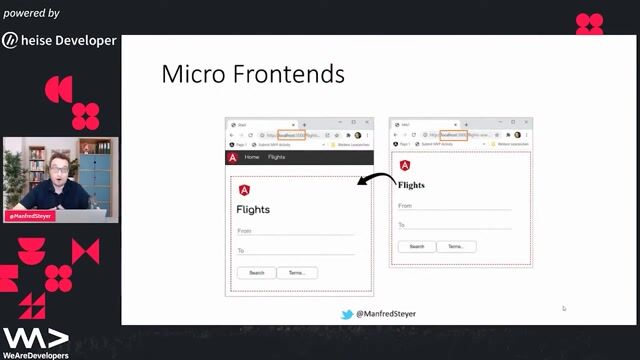
45:40Micro Frontends with Module Federation: Why and How?
Manfred Steyer
 35:17
35:17Front-End Micro Apps
Serg Hospodarets
 40:05
40:05Stairway to Heaven - Scaling Frontends the Right Way
Florian Rappl
 40:17
40:17Micro-frontends anti-patterns
Luca Mezzalira
 41:49
41:49Destructuring Frontend monoliths with MicroFrontends
Trishul Goel
 59:03
59:03Multiple Ships to the Island - Micro Frontends & Island Architectures
Florian Rappl
 47:05
47:05Micro-frontends anti-patterns
Luca Mezzalira
 44:35
44:35Micro-Frontends with Module Federation: Beyond the Basics
Manfred Steyer
Related Articles
View all articles

.gif?w=240&auto=compress,format)
.png?w=240&auto=compress,format)
From learning to earning
Jobs that call for the skills explored in this talk.


doinstruct Software GmbH
Berlin, Germany
Senior
GIT
JavaScript
TypeScript


Die Socialisten
Vienna, Austria
Senior
Jest
React
Redux
JavaScript


ELFIN Engineering and Solutions GmbH
€60-68K
Vue.js
Node.js
TypeScript
Software Architecture
+1
Mindpeak
Intermediate
Linux
WebGL
Docker
TypeScript
Machine Learning