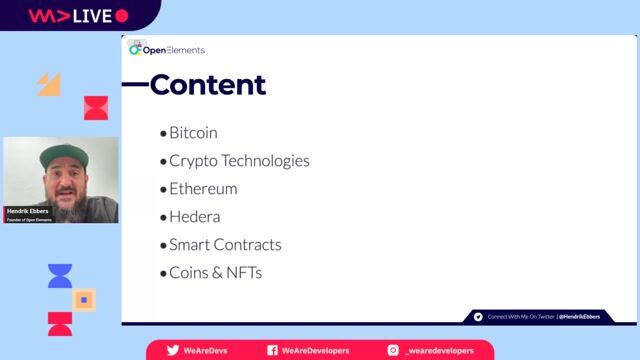
Hendrik Ebbers
Blockchain, NFT and smart contracts for my application
#1about 5 minutes
The mysterious origins and creator of Bitcoin
Learn about the 2008 white paper, the goals of Bitcoin as an everyday currency, and the enduring mystery of its anonymous creator, Satoshi Nakamoto.
#2about 5 minutes
How crypto wallets work and why coins get lost
A crypto wallet stores your public and private keys, but losing these keys means your funds are permanently inaccessible, unlike a traditional bank account.
#3about 6 minutes
Solving cross-border payments with distributed ledgers
A proof-of-concept using Hedera between banks in South Africa and South Korea dramatically reduced international transfer times and costs from days and $40 to minutes and cents.
#4about 9 minutes
Understanding consensus mechanisms like proof of work
Distributed ledgers achieve trust by having every node execute every transaction, using consensus mechanisms like Proof of Work where nodes solve complex puzzles to validate blocks.
#5about 5 minutes
Introducing Ethereum and programmable smart contracts
Ethereum introduced the Ethereum Virtual Machine (EVM), allowing developers to deploy and execute trusted code, known as smart contracts, directly on the network.
#6about 3 minutes
Comparing the energy consumption of crypto networks
The energy usage of Proof of Work networks like Bitcoin is massive, while newer Proof of Stake systems like Ethereum 2.0 offer a significantly more sustainable alternative.
#7about 7 minutes
Exploring Hedera as a third-generation enterprise ledger
Hedera is a high-performance, carbon-negative distributed ledger governed by a council of major corporations, designed for enterprise use cases like supply chain tracking.
#8about 5 minutes
How to build applications with smart contracts
Applications are built using languages like Solidity, compiled to EVM bytecode, and deployed to the network, with transaction costs determined by computational 'gas' fees.
#9about 5 minutes
Understanding fungible tokens (FTs) and NFTs
Tokens are smart contracts that follow specific standards, with fungible tokens (like money) being interchangeable and non-fungible tokens (NFTs) representing unique digital assets.
#10about 5 minutes
Q&A on digital ownership, NFTs, and scalability
The session concludes with a discussion on the challenges of proving ownership with NFTs for digital art and strategies for ensuring security and scalability in blockchain applications.
Related jobs
Jobs that call for the skills explored in this talk.


Matching moments
02:56 MIN
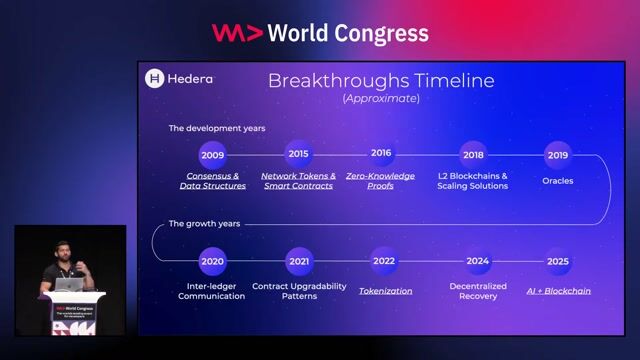
Exploring real-world applications of distributed ledgers
Demystifying Crypto & Web3: A Technical Journey Through 15 Years of Innovation
Unlock full access
Log in or set up an account to access this feature and more.

03:42 MIN
Exploring real-world blockchain use cases and adoption
Solving Real-world Problems with Blockchain at Algorand - Brian Whippo
Unlock full access
Log in or set up an account to access this feature and more.
02:58 MIN
Viewing blockchain as another operating system for developers
Why You Should Care About the Decentralized Computing Movement
Unlock full access
Log in or set up an account to access this feature and more.
01:00 MIN
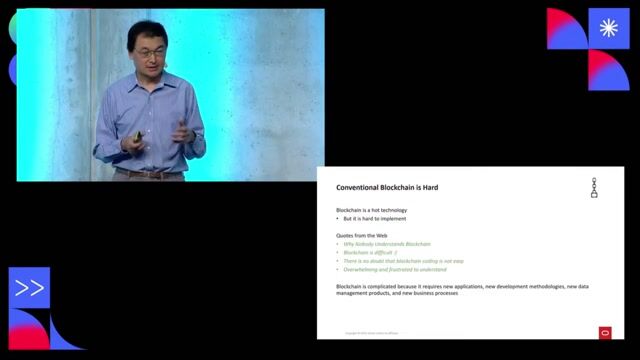
The implementation challenges of conventional blockchain technology
Crypto-secure Data Management with In-Database Blockchain
Unlock full access
Log in or set up an account to access this feature and more.
03:13 MIN
Why distributed ledger technology matters for business
Demystifying Crypto & Web3: A Technical Journey Through 15 Years of Innovation
Unlock full access
Log in or set up an account to access this feature and more.
01:46 MIN
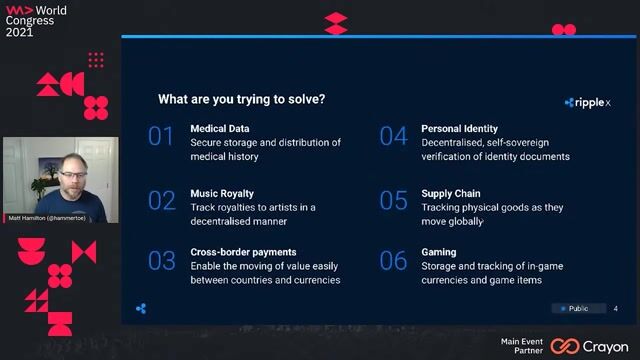
Exploring common use cases for blockchain technology
The Developer Handbook: How to Build on the Blockchain
Unlock full access
Log in or set up an account to access this feature and more.
04:44 MIN
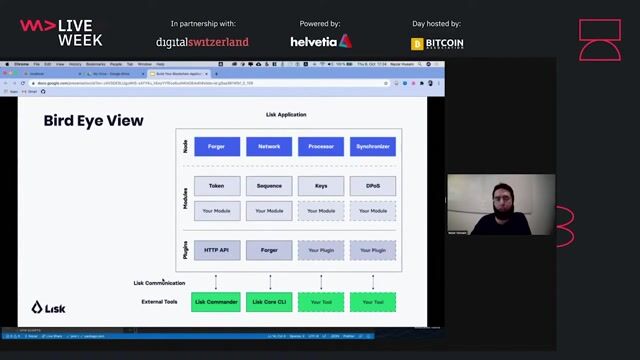
Exploring blockchain use cases and introducing NFTs
Build Your Blockchain Application in JavaScript
Unlock full access
Log in or set up an account to access this feature and more.
03:34 MIN
Exploring practical blockchain use cases for the retail sector
Coffee with Developers
Unlock full access
Log in or set up an account to access this feature and more.
Featured Partners
Related Videos
 30:32
30:32Debunking the Top 10 Myths about Web 3
Ed Marquez
 58:00
58:00Web3 Developer Crash Course
Marko Ivanković
 56:45
56:45Trust as the Key Concept in Future Mobility
Peter Busch
 42:19
42:19Road to Web3
Soumaya Erradi
 49:33
49:33Why chain abstraction is the best way to build successful web3 solutions for users
Alen Meštrov
 39:59
39:59Leveraging Blockchain Technology for Business
Marta Geater-Pierkarska
 28:50
28:50Demystifying Crypto & Web3: A Technical Journey Through 15 Years of Innovation
Ed Marquez
 30:11
30:11A Primer on Blockchain and Hedera: An Intro Through Terms
Ryan Arndt
Related Articles
View all articles


From learning to earning
Jobs that call for the skills explored in this talk.


TechBiz Global GmbH
Berlin, Germany
Remote
Intermediate
Redis
MongoDB
Node.js
Ethereum
+3
Stolzberger GmbH
Berlin, Germany
Remote
Ethereum
Blockchain
Microsoft Office
Continuous Integration
TechBiz Global GmbH
Bergisch Gladbach, Germany
Remote
Intermediate
Redis
MongoDB
Node.js
Ethereum
+3
TechBiz Global GmbH
Bernau bei Berlin, Germany
Remote
Intermediate
Redis
MongoDB
Node.js
Ethereum
+3
TechBiz Global GmbH
Brussels, Belgium
Remote
Intermediate
Redis
MongoDB
Node.js
Ethereum
+3
TechBiz Global GmbH
Baden-Baden, Germany
Remote
Intermediate
Redis
MongoDB
Node.js
Ethereum
+3