Ire Aderinokun
Future-Proof CSS
#1about 4 minutes
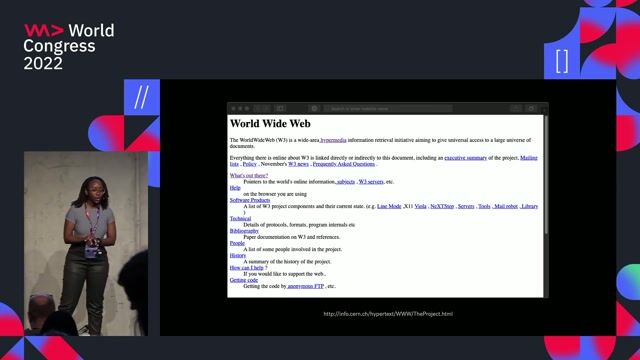
The web's foundational principle of backward compatibility
Web technologies are designed not to break older sites, ensuring longevity even for pages with deprecated or missing HTML elements.
#2about 4 minutes
Building for resilience with progressive enhancement
Progressive enhancement starts with a core experience for the least capable devices and adds features for modern browsers, unlike graceful degradation.
#3about 2 minutes
The unique challenges of progressive enhancement in CSS
Unlike JavaScript, CSS lacks robust built-in feature detection and error handling, which causes styles to fail silently without feedback.
#4about 5 minutes
Core techniques for writing robust and resilient CSS
Start with sensible HTML, leverage the cascade for fallbacks, use mobile-first media queries, and use older, well-supported properties when needed.
#5about 2 minutes
Using feature queries for progressive enhancement
Use positive @supports queries to apply modern CSS as an enhancement, ensuring a functional baseline for browsers that don't support feature queries.
#6about 6 minutes
Writing CSS for a global audience with internationalization
Adapt layouts for different languages and writing directions by using logical properties like `margin-inline-start` instead of physical ones like `margin-left`.
#7about 5 minutes
Using the right tool for the right job for accessibility
Improve accessibility by using HTML for content, CSS for styling, and JavaScript for functionality, avoiding hacks like using CSS pseudo-elements for labels.
#8about 3 minutes
Preserving accessibility when customizing default styles
When restyling default elements like buttons, ensure you provide accessible alternatives for focus states and adapt to user preferences like reduced motion.
#9about 6 minutes
Proactively auditing CSS for accessibility and compliance
Use browser developer tools like Firefox Accessibility Inspector and Lighthouse to audit for issues, but supplement them with real user testing for complete coverage.
Related jobs
Jobs that call for the skills explored in this talk.


Matching moments

17:51 MIN
Discussion on the evolution and future of CSS
What's new in CSS for Designers?
Unlock full access
Log in or set up an account to access this feature and more.
11:50 MIN
Q&A on CSS history, design, and print standards
How to write a book with CSS
Unlock full access
Log in or set up an account to access this feature and more.

10:04 MIN
Analyzing the new Web Readiness Report and modern CSS
WeAreDevelopers LIVE - 50 years Microsoft, Web Readiness Report, The German Web Community and more
Unlock full access
Log in or set up an account to access this feature and more.

03:47 MIN
How past browser features inform modern standards
Explore new web features before everyone else
Unlock full access
Log in or set up an account to access this feature and more.
10:33 MIN
Reflecting on 15 years of responsive web design
WeAreDevelopers LIVE - Moving into DevRel, The death of search APIs, Building with empathy and more
Unlock full access
Log in or set up an account to access this feature and more.
02:26 MIN
Writing efficient and sustainable CSS
Sustainable me. A tale of good design.
Unlock full access
Log in or set up an account to access this feature and more.
08:04 MIN
Evolving CSS from basic styles to advanced effects
How to write a book with CSS
Unlock full access
Log in or set up an account to access this feature and more.
09:10 MIN
Returning to foundational web technologies like RSS and HTML
Using all the HTML, Running State of the Browser and "Modern" is Rubbish
Unlock full access
Log in or set up an account to access this feature and more.
Featured Partners
Related Videos
 28:00
28:00Can CSS recreate Tufte's designs?
Håkon Wium Lie
 40:25
40:25How to write a book with CSS
Håkon Wium Lie
 29:11
29:11Design Principles For The Web
Jeremy Keith
 43:11
43:11The State Of The Web
Jeremy Keith
 59:20
59:20What's new in CSS for Designers?
Onur Gumus
 44:43
44:43Explore new web features before everyone else
Nikita Dubko
 29:40
29:40Is CSS Houdini finally usable in 2023?
Tanja Ulianova
 32:56
32:56Web development: where are we, and where are we going?
Laurie Voss
Related Articles
View all articles.webp?w=240&auto=compress,format)

.webp?w=240&auto=compress,format)
From learning to earning
Jobs that call for the skills explored in this talk.


infomax websolutions GmbH
Grassau, Germany
Intermediate
Senior
CSS
HTML
JavaScript
TypeScript

Kresse & Discher GmbH
Offenburg, Germany
Intermediate
Senior
CSS
Figma
JavaScript

doinstruct Software GmbH
Berlin, Germany
Senior
GIT
JavaScript
TypeScript


Tech Solutions Gmbh
GIT
HTML
Vue.js
Tech Solutions Gmbh
GIT
HTML
Vue.js
Tech Solutions Gmbh
GIT
HTML
Vue.js
MyArtside GbR R. & S. Baudisch
Intermediate
MySQL
Figma
jQuery
Contao
Adobe Photoshop
+1