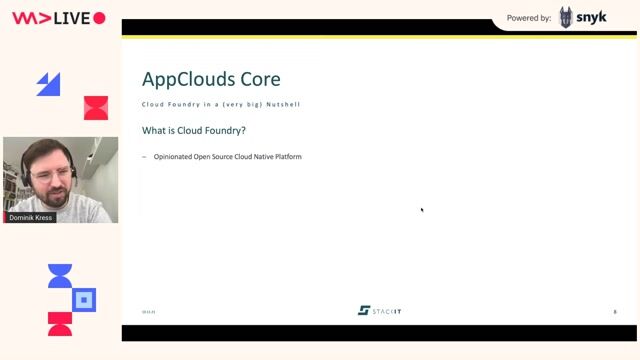
Dominik Kress
CD2CF - Continuous Deployment to Cloud Foundry
#1about 5 minutes
Understanding the core philosophy of Cloud Foundry
Cloud Foundry abstracts infrastructure complexity, allowing developers to deploy source code directly to the cloud without managing underlying configurations.
#2about 6 minutes
A high-level overview of Cloud Foundry architecture
Key components like the Go Router for routing, UAA for authentication, and Diego for container lifecycle management work together to run applications.
#3about 7 minutes
Organizing work with organizations and spaces
Cloud Foundry uses a two-level hierarchy of organizations and spaces to manage access, resources, and application environments for different teams or projects.
#4about 3 minutes
Automating deployment with service accounts
Service accounts provide scoped, non-personal credentials that can be created through the marketplace for use in automated CI/CD pipelines.
#5about 16 minutes
Building a deployment pipeline with GitHub Actions
A GitHub Actions workflow automates the process of building a Java application, authenticating with the CF CLI, and pushing the artifact to Cloud Foundry.
#6about 8 minutes
How buildpacks automatically containerize your application
Buildpacks are scripts that detect the application type, compile dependencies, and package the code into a runnable container image called a droplet, automating containerization.
#7about 5 minutes
Verifying the deployment and application logs
After a successful pipeline run, the deployed application appears in the Stratos UI, where its status, logs, and public route can be inspected.
#8about 4 minutes
How application scaling works in Cloud Foundry
Applications are scaled horizontally by adjusting the number of instances, either manually via the CLI or automatically using an autoscaler based on metrics like CPU load.
#9about 2 minutes
Understanding container security on Cloud Foundry
Security is managed through secure community buildpacks, network traffic rules via Application Security Groups (ASGs), and integrating scanning tools into the pipeline.
#10about 7 minutes
Migrating applications and the stateless requirement
Cloud Foundry is best suited for stateless, 12-factor applications, as it does not provide persistent storage, requiring state to be managed in external data services.
#11about 6 minutes
Differentiating between container, cloud, and serverless
A high-level explanation clarifies that containers package applications, cloud provides virtualized resources, and serverless executes functions on-demand.
Related jobs
Jobs that call for the skills explored in this talk.


Matching moments
04:32 MIN
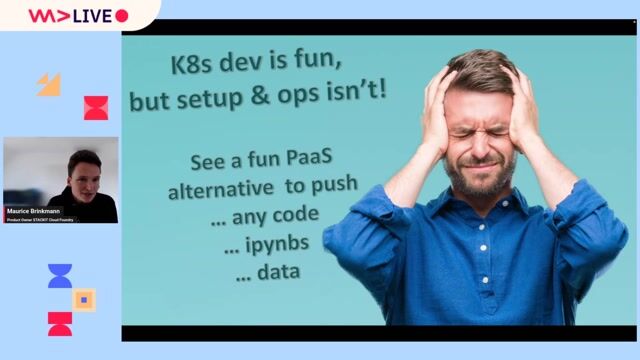
Understanding Cloud Foundry as a PaaS alternative
Kubernetes dev is fun, but setup and ops isn't! See a fun PaaS alternative to push any code, ipynbs or even just data!
Unlock full access
Log in or set up an account to access this feature and more.
11:33 MIN
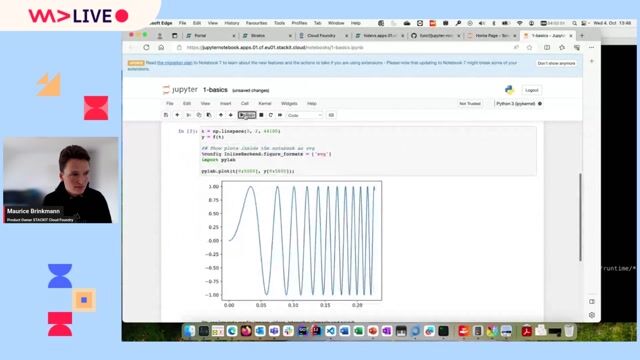
Q&A on PaaS, security, and Cloud Foundry limitations
Kubernetes dev is fun, but setup and ops isn't! See a fun PaaS alternative to push any code, ipynbs or even just data!
Unlock full access
Log in or set up an account to access this feature and more.
02:34 MIN
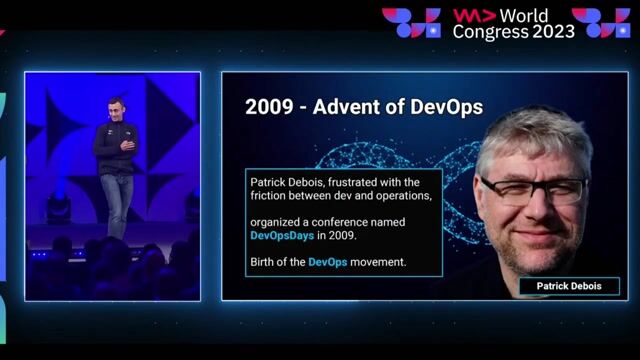
Bridging gaps with DevOps and containerization
From Punch Cards to AI-assisted Development
Unlock full access
Log in or set up an account to access this feature and more.
04:13 MIN
Deploying a Node.js app with STACKIT Cloud Foundry
The Future of Cloud is Abstraction - Why Kubernetes is not the Endgame for STACKIT
Unlock full access
Log in or set up an account to access this feature and more.
10:08 MIN
A tour of essential DevOps concepts and tools
My journey into DevOps world - How it all started!
Unlock full access
Log in or set up an account to access this feature and more.
10:22 MIN
Deconstructing the `cf push` deployment workflow
Kubernetes dev is fun, but setup and ops isn't! See a fun PaaS alternative to push any code, ipynbs or even just data!
Unlock full access
Log in or set up an account to access this feature and more.
05:52 MIN
Q&A on shared systems and scaling productivity
Forget Developer Platforms, Think Developer Productivity!
Unlock full access
Log in or set up an account to access this feature and more.
03:25 MIN
Identifying the limitations of the initial Cloud Foundry platform
Back(end) to the Future: Embracing the continuous Evolution of Infrastructure and Code
Unlock full access
Log in or set up an account to access this feature and more.
Featured Partners
Related Videos
 56:15
56:15Kubernetes dev is fun, but setup and ops isn't! See a fun PaaS alternative to push any code, ipynbs or even just data!
Maurice Brinkmann
 34:39
34:39Program your infrastructure with CDK and TypeScript
Robert Hoffmann
 58:40
58:40Platform Engineering vs. DevOps Why not both?
Christian Strack
 56:19
56:19Plan CI/CD on the Enterprise level!
Pawel Piwosz
 34:46
34:46We adopted DevOps and are Cloud-native, Now What?
Bruno Amaro Almeida
 36:09
36:09GitOps keeps focus on apps, not on infrastructure
Chad Carlson
 50:02
50:02Get ready for operations by pull requests
Liviu Costea
 28:52
28:52The power of Cloud Development Kit (CDK): How to get the most out of it
Alexander Bubeck
Related Articles
View all articles


From learning to earning
Jobs that call for the skills explored in this talk.


iits-consulting GmbH
Munich, Germany
Intermediate
Go
Docker
DevOps
Kubernetes


smartclip Europe GmbH
Hamburg, Germany
Intermediate
Senior
GIT
Linux
Python
Kubernetes


