aa
aa
#1about 5 minutes
The traditional design-to-development handoff process
Designers provide static specifications like CSS properties from tools like Figma for developers to manually implement in code.
#2about 3 minutes
Reframing AI as automated intelligence for developers
AI can be viewed as automated intelligence, which focuses on streamlining developer workflows by automating repetitive processes.
#3about 2 minutes
Understanding core AI concepts like LLMs, agents, and MCPs
Key AI terms are defined, with LLMs as the brain, agents as the body with tools, and MCPs as the middleware connecting them.
#4about 4 minutes
Generating automated tests using Playwright and an MCP
A demonstration shows how to use a Playwright MCP to generate test code from a structured natural language prompt.
#5about 5 minutes
Generating UI components directly from Figma designs
The Figma MCP allows developers to generate UI components, including variations and Storybook stories, directly from a Figma design URL.
#6about 4 minutes
Automating component creation with a defined workflow file
A workflow file can automate a multi-step component generation process, but the output may still require manual refinement and lack component reuse.
#7about 5 minutes
Using structured design data for better code generation
To improve AI-generated code quality, designs must be structured with well-defined properties, variants, and states that can be synced to the codebase.
#8about 5 minutes
Bridging the gap between design and code with Figma Connect
Figma Connect syncs design tokens and component properties, allowing developers to see live code documentation within Figma and maintain consistency.
#9about 7 minutes
Maintaining human oversight in AI-assisted development
AI tools augment workflows but require human supervision and a fundamental understanding of the code being generated to prevent errors and ensure quality.
#10about 6 minutes
The risks of over-automation and losing core skills
Relying too heavily on automation can lead to a loss of fundamental knowledge, making it difficult to debug issues or understand the 'why' behind the code.
Related jobs
Jobs that call for the skills explored in this talk.


Matching moments

03:11 MIN
Figma's strategy for integrating AI features
Fireside Chat with Kris Rasmussen, CTO at Figma
Unlock full access
Log in or set up an account to access this feature and more.
03:53 MIN
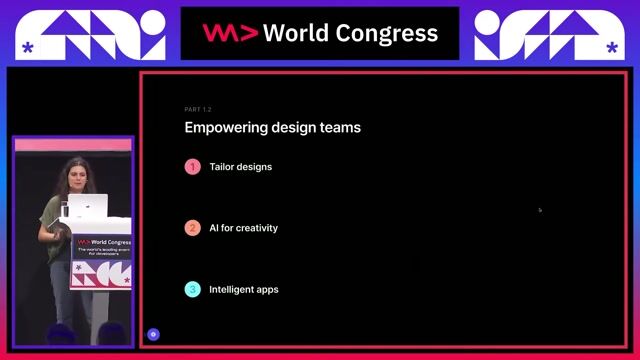
Empowering design teams with AI-driven capabilities
Insight into AI-Driven Design
Unlock full access
Log in or set up an account to access this feature and more.

03:51 MIN
The diverse ways AI assists developers today
Developer Productivity Using AI Tools and Services - Ryan J Salva
Unlock full access
Log in or set up an account to access this feature and more.

03:55 MIN
The future of developer tools in an AI-driven world
Are frameworks like React redundant in an AI world?
Unlock full access
Log in or set up an account to access this feature and more.

03:11 MIN
Using generative AI to enhance developer productivity
Throwing off the burdens of scale in engineering
Unlock full access
Log in or set up an account to access this feature and more.
05:58 MIN
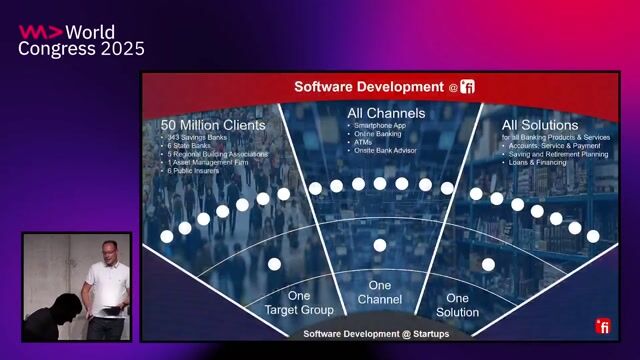
Using AI to improve the entire development process
Breaking Silos: Successful Collaboration Between Tech & Business Teams in Complex Enterprise Systems
Unlock full access
Log in or set up an account to access this feature and more.
01:28 MIN
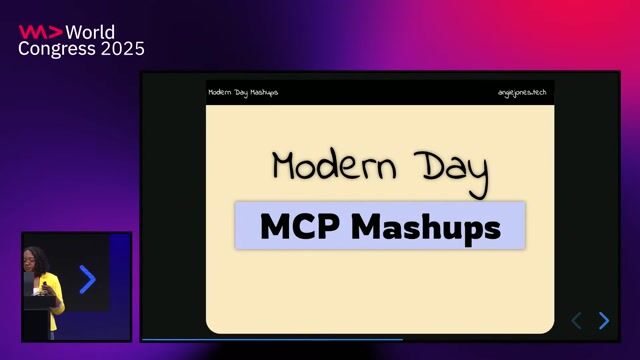
Demo of an AI agent converting Figma to code
MCP Mashups: How AI Agents are Reviving the Programmable Web
Unlock full access
Log in or set up an account to access this feature and more.

05:51 MIN
Using AI to create guided product experiences
What’s New with Google Gemini?
Unlock full access
Log in or set up an account to access this feature and more.
Featured Partners
Related Videos
 36:41
36:41aa
aa
 33:40
33:40aa
aa
 50:07
50:07aa
aa
 28:24
28:24Designing the Future of Human<>Agent Collaboration
Emil Sjölander
 04:58
04:58NoCode LiveCode: Leveraging AI Tools to Craft Fully Functional Apps!
Karan Shetti
 31:30
31:30Accessibility powered by AI
Ramona Domen
 32:26
32:26Bringing the power of AI to your application.
Krzysztof Cieślak
 30:36
30:36How to become an AI toolsmith
Clemens Helm
Related Articles
View all articles


From learning to earning
Jobs that call for the skills explored in this talk.


Ai-driven
Gemma Analytics