Max Hausner & Yves Fauser
gRPC Load Balancing Deep Dive
#1about 4 minutes
An overview of gRPC fundamentals and its trade-offs
gRPC is a high-performance framework using Protobuf for efficiency, but it has limitations in browser support and tooling maturity compared to REST.
#2about 4 minutes
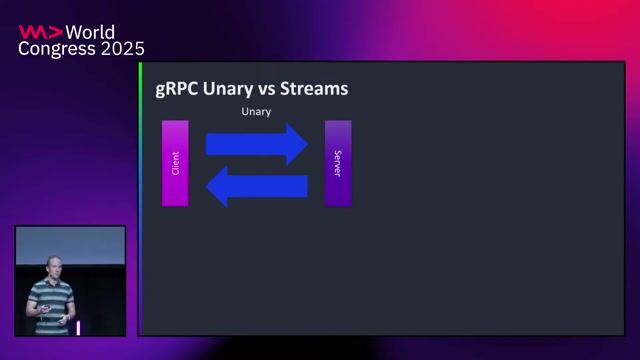
How gRPC streaming and HTTP/2 affect load balancing
gRPC supports various streaming patterns over persistent HTTP/2 connections, which can cause traffic hotspots with traditional Layer 4 load balancing.
#3about 3 minutes
Client-side versus infrastructure-based load balancing strategies
Choose client-side load balancing for low-latency internal services and infrastructure-based load balancing for external APIs that require a clear demarcation point.
#4about 7 minutes
Exploring different types of load balancing algorithms
A review of basic, load-based, and hash-based algorithms reveals that options like "least outstanding requests" can outperform simple round robin for uneven loads.
#5about 2 minutes
Why autoscaling gRPC services can be challenging
Long-lived streaming connections can prevent traffic from being distributed to newly scaled instances, making traditional CPU-based autoscaling ineffective.
#6about 4 minutes
Tools for functional and performance testing of gRPC
Use tools like grpcurl for functional API testing with proto files and ghz for comprehensive performance and load testing of your gRPC services.
#7about 3 minutes
Case study: Separating unary and streaming calls
A practical example shows how separating unary and streaming gRPC calls into different Kubernetes services and target groups solves uneven load distribution.
#8about 1 minute
Key takeaways for effective gRPC load balancing
Successfully load balance gRPC by being mindful of long-lived sessions, understanding client traffic patterns, and selecting L7-based algorithms when possible.
Related jobs
Jobs that call for the skills explored in this talk.


Matching moments
02:46 MIN
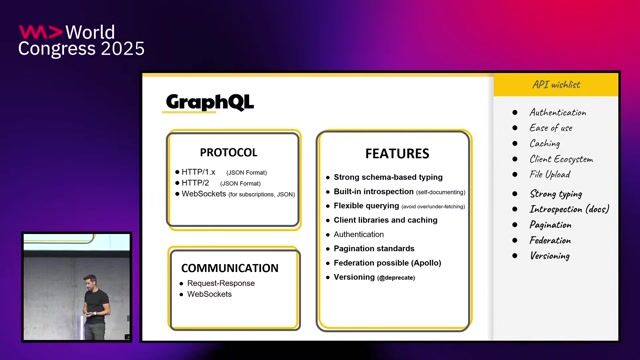
Exploring gRPC for high-performance communication
REST in Peace? What does the API protocol of the future look like? Or do we have it already?
01:28 MIN
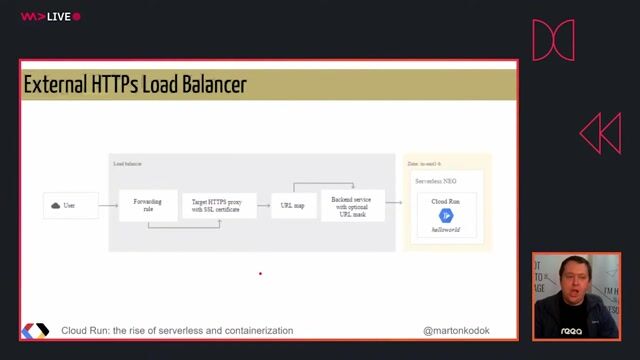
Using a load balancer for multi-region deployments
Cloud Run- the rise of serverless and containerization
07:04 MIN
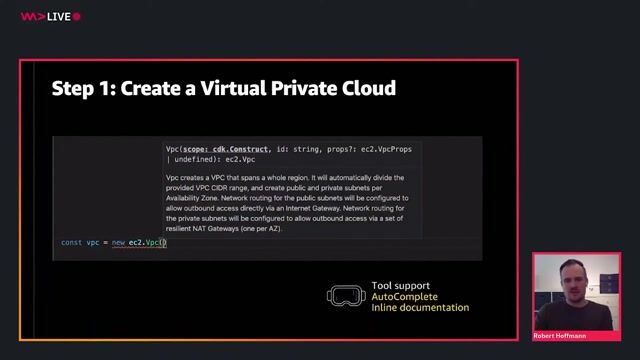
Building a load-balanced web app with CDK
Program your infrastructure with CDK and TypeScript

15:32 MIN
Q&A on GraalVM, Project Loom, and gRPC
Bootiful Spring Boot 3
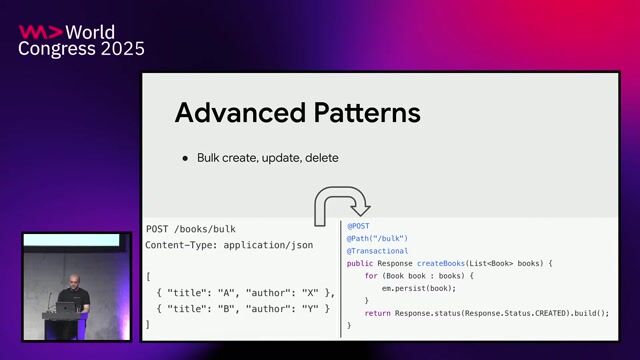
02:07 MIN
Exploring alternatives to REST like gRPC and GraphQL
API = Some REST and HTTP, right? RIGHT?!

01:31 MIN
Q&A: GraphQL bombs and gRPC for microservices
The Great API Debate: REST, GraphQL, or gRPC?

03:35 MIN
Evaluating the pros and cons of REST, GraphQL, and gRPC
The Great API Debate: REST, GraphQL, or gRPC?
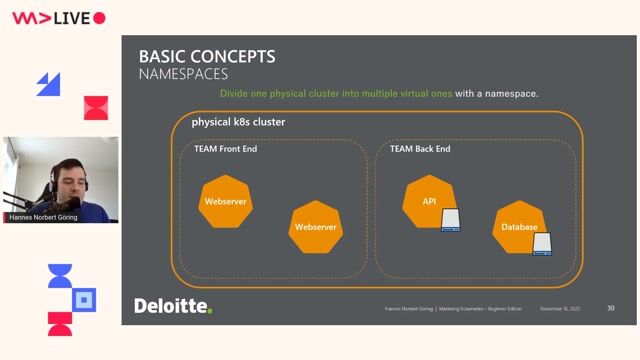
02:57 MIN
A high-level overview of Kubernetes cluster architecture
Mastering Kubernetes – Beginner Edition
Featured Partners
Related Videos
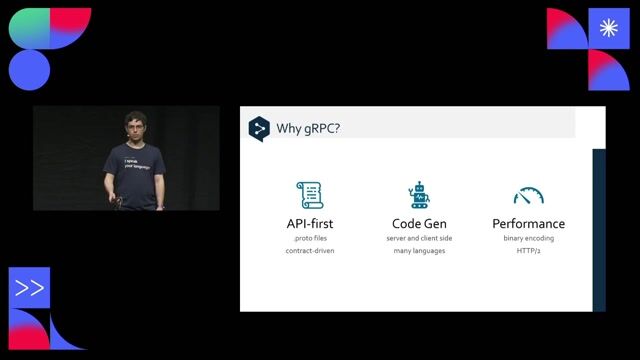 27:17
27:17Designing gRPC APIs - The things they don't tell you
Bastian Eicher
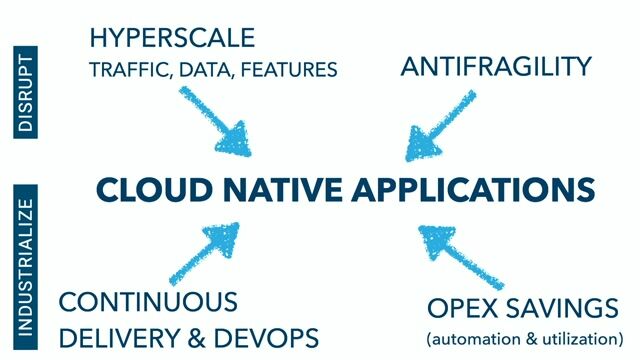 30:26
30:26Fifty Shades of Kubernetes Autoscaling
Mario-Leander Reimer
 32:19
32:19A Deep Dive on How To Leverage the NVIDIA GB200 for Ultra-Fast Training and Inference on Kubernetes
Kevin Klues
 28:16
28:16The Great API Debate: REST, GraphQL, or gRPC?
Alexis Yushin
 20:39
20:39Demystifying application networking in the cloud
Duan Lightfoot
 16:38
16:38Develop, test and run a communications application in a serverless cloud
Filippos Kyprianou & Maksym Mednikov
 28:03
28:03Containers in the cloud - State of the Art in 2022
Federico Fregosi
 20:29
20:29REST in Peace? What does the API protocol of the future look like? Or do we have it already?
Simon Auer
Related Articles
View all articles



From learning to earning
Jobs that call for the skills explored in this talk.


Peter Park System GmbH
München, Germany
Senior
Python
Docker
Node.js
JavaScript


iits-consulting GmbH
Munich, Germany
Intermediate
Go
Docker
DevOps
Kubernetes

doinstruct Software GmbH
Berlin, Germany
Intermediate
Senior
Node.js

CONTIAMO GMBH
Berlin, Germany
Senior
Python
Docker
TypeScript
PostgreSQL

SYSKRON GmbH
Regensburg, Germany
Intermediate
Senior
.NET
Python
Kubernetes


adconova GmbH
Docker
Terraform
Kubernetes
Elasticsearch
Microsoft Office
+2