Ricardo
Agentic AI - From Theory to Practice: Developing Multi-Agent AI Systems on Azure
#1about 3 minutes
Understanding the core components of an AI agent
AI agents evolve beyond simple chatbots by using large language models, instructions, and tools to integrate directly into business processes.
#2about 2 minutes
Solving developer challenges with Azure AI Foundry
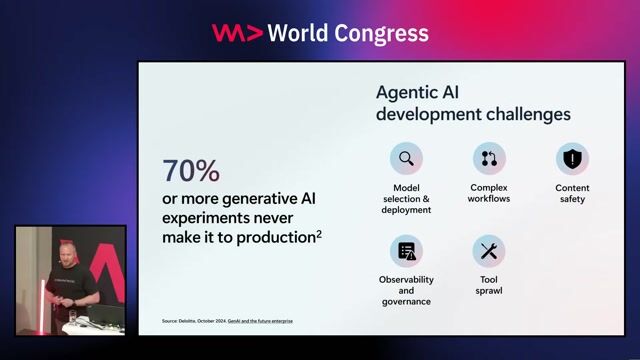
Azure AI Foundry provides a comprehensive platform to address common developer challenges like model selection, security, and observability when building AI agents.
#3about 1 minute
Exploring the Azure AI Foundry Agent Service
The Agent Service offers enterprise-grade features including orchestration, SDK integrations, knowledge tools, and built-in content safety for robust agent development.
#4about 2 minutes
The development lifecycle from ideation to production
The AI application lifecycle consists of ideation, implementation, and operations, starting with low-cost experimentation in GitHub Models before moving to Azure Foundry.
#5about 4 minutes
Experimenting with prompts and models in GitHub
Use GitHub Models to rapidly prototype by comparing different prompts and models against test datasets and using evaluators to generate performance KPIs.
#6about 3 minutes
Integrating evaluation and monitoring into your workflow
Implement a robust evaluation strategy by incorporating KPI checks into CI/CD pipelines and using continuous monitoring with end-to-end tracing in production.
#7about 7 minutes
Building a multi-agent contract analysis application
A practical example demonstrates a multi-agent system that analyzes contracts, checks compliance, and uses automated evaluations for continuous quality assurance.
#8about 2 minutes
Choosing the right multi-agent interaction pattern
Design effective multi-agent systems by selecting the appropriate interaction pattern, such as sequential, concurrent, or group chat, based on your process and outcome goals.
#9about 2 minutes
Implementing agent workflows with Semantic Kernel
Use the Semantic Kernel agent and process frameworks to implement complex multi-agent workflows and deploy them scalably across various environments.
Related jobs
Jobs that call for the skills explored in this talk.


Matching moments
02:40 MIN
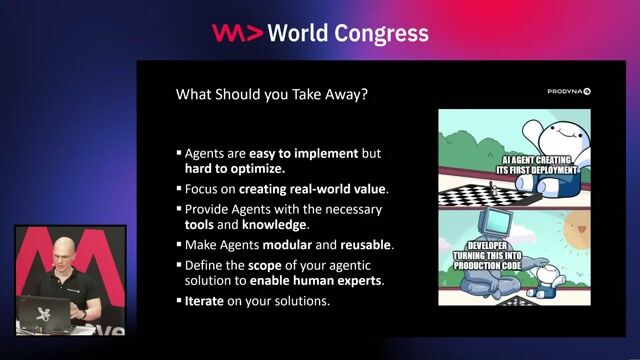
Key takeaways for implementing AI agent solutions
Infrastructure as Prompts: Creating Azure Infrastructure with AI Agents
Unlock full access
Log in or set up an account to access this feature and more.
01:27 MIN
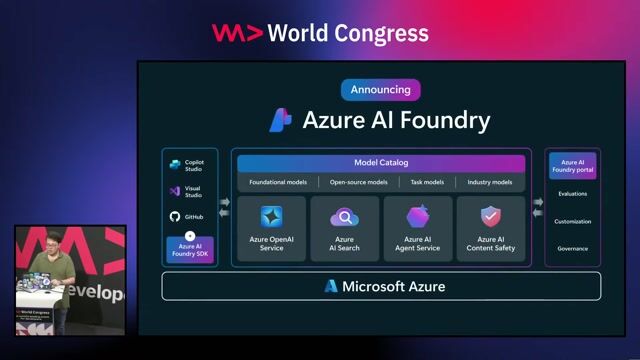
Getting started with the Azure AI Foundry platform
How Mixed Reality, Azure AI and Drones turned me into a Magician?
Unlock full access
Log in or set up an account to access this feature and more.
03:00 MIN
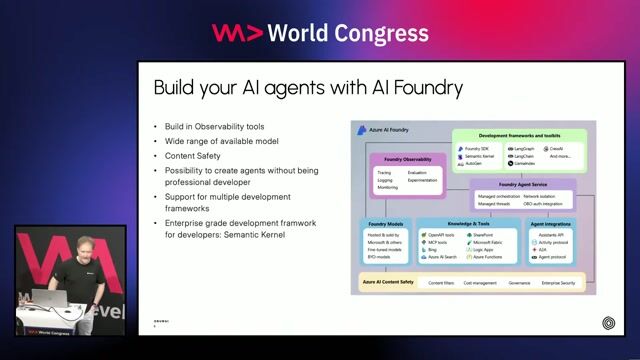
Exploring the capabilities of Azure AI Foundry
Azure AI Foundry for Developers: Open Tools, Scalable Agents, Real Impact
Unlock full access
Log in or set up an account to access this feature and more.
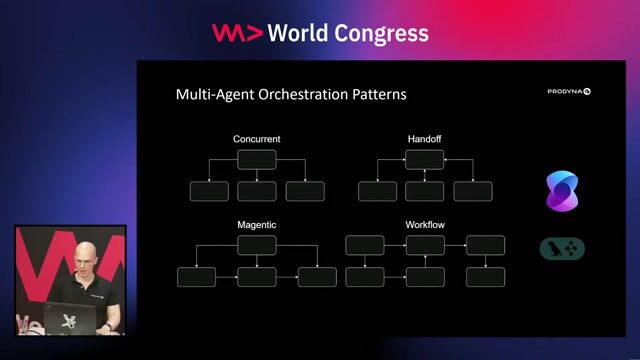
03:57 MIN
Designing a multi-agent system for Azure infrastructure
Infrastructure as Prompts: Creating Azure Infrastructure with AI Agents
Unlock full access
Log in or set up an account to access this feature and more.
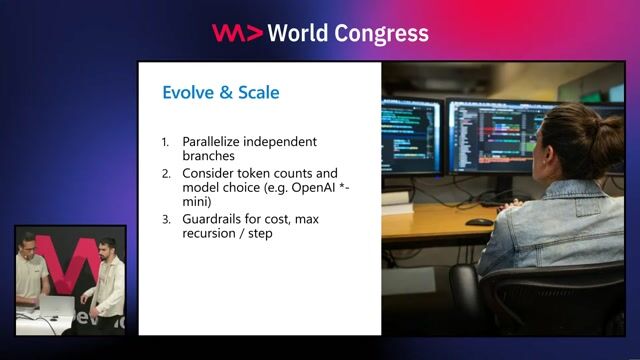
07:19 MIN
Demo of an agentic system for Azure architecture design
Rethinking Workflows in the Agentic Era
Unlock full access
Log in or set up an account to access this feature and more.
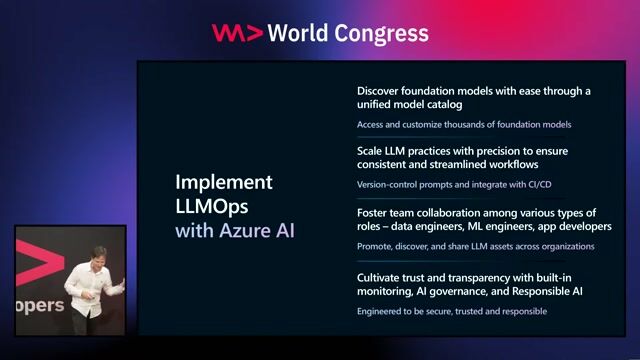
04:27 MIN
How the Azure AI platform supports the GenAIOps journey
From Traction to Production: Maturing your GenAIOps step by step
Unlock full access
Log in or set up an account to access this feature and more.
04:59 MIN
Introducing the Azure AI platform for end-to-end LLMOps
From Traction to Production: Maturing your LLMOps step by step
Unlock full access
Log in or set up an account to access this feature and more.
02:48 MIN
Understanding the core components of agentic AI systems
Agentic AI Systems for Critical Workloads
Unlock full access
Log in or set up an account to access this feature and more.
Featured Partners
Related Videos
 23:33
23:33Azure AI Foundry for Developers: Open Tools, Scalable Agents, Real Impact
Oliver Will
 26:54
26:54Infrastructure as Prompts: Creating Azure Infrastructure with AI Agents
Marcel Scherenberg
 28:53
28:53Agentic DevOps: How AI-Powered Automation Transforms Software Delivery on GitHub and Azure
Mike
 24:22
24:22Beyond Chatbots: How to build Agentic AI systems
Philipp Schmid
 27:07
27:07Rethinking Workflows in the Agentic Era
Eric Jadi & Rene Pajta
 23:39
23:39Building Blocks for Agentic Solutions in your Enterprise
Dennis Zielke & Rene Pajta
 29:03
29:03On a Secret Mission: Developing AI Agents
Jörg Neumann
 25:32
25:32Beyond Prompting: Building Scalable AI with Multi-Agent Systems and MCP
Viktoria Semaan
Related Articles
View all articles



From learning to earning
Jobs that call for the skills explored in this talk.


Ai-driven
autonomous-teaming
Potsdam, Germany
Remote
DevOps
Node.js
TypeScript
Devoteam
Intermediate
PyTorch
PySpark
Tensorflow
Adobe InDesign
Machine Learning
Microsoft Deutschland GmbH
Remote
€187-208K
Senior
DevOps
Node.js
Kubernetes
+1
adesso SE
Docker
Kubernetes
Microservices
Continuous Integration
adesso SE
€64-85K
Docker
Kubernetes
Microservices
Continuous Integration