Niels Leenheer
The Resilience of the World Wide Web
#1about 2 minutes
Understanding the inherent resilience of HTML
HTML is fundamentally designed to be error-tolerant and forgiving for non-professionals, unlike JavaScript which fails on simple mistakes.
#2about 2 minutes
The creation of the web by Tim Berners-Lee
Tim Berners-Lee created the World Wide Web at CERN to facilitate information sharing among scientists, with resilience built in from the start.
#3about 3 minutes
How browsers achieve forward and backward compatibility
Browsers ensure compatibility by ignoring unrecognized HTML tags and treating them as generic elements in the DOM, as seen with the noscript tag.
#4about 2 minutes
Recreating deprecated HTML tags with modern techniques
Deprecated tags like blink and marquee can be brought back to life using CSS animations, demonstrating HTML's flexibility.
#5about 7 minutes
How the HTML tokenizer parses tags and attributes
The browser's tokenizer processes HTML character by character, allowing for unconventional but valid tag names which enables frameworks like Angular and Vue.
#6about 1 minute
Why semantic HTML is still critically important
Despite HTML's flexibility with custom tags, using proper semantic elements like the button tag is essential for accessibility and built-in browser functionality.
#7about 5 minutes
How the DOM tree builder automatically corrects errors
The tree builder ensures a valid DOM by automatically inserting missing elements like html and body, and by intelligently fixing improperly nested tags.
#8about 3 minutes
Embracing the web's original spirit of creation
The web was designed for everyone to create and share content, so developers should build personal websites instead of relying solely on commercial platforms.
#9about 2 minutes
How the noscript tag actually works in browsers
The noscript tag's content is treated as plain text by the parser, which explains why it cannot be nested, styled, or contain a functional script tag.
Related jobs
Jobs that call for the skills explored in this talk.


Matching moments
01:52 MIN
Why HTML is inherently more resilient than JavaScript
The Resilience of the World Wide Web
Unlock full access
Log in or set up an account to access this feature and more.
04:00 MIN
The web's foundational principle of backward compatibility
Future-Proof CSS
Unlock full access
Log in or set up an account to access this feature and more.

05:07 MIN
The World Wide Web era of scalability and design
Closing Keynote by Joel Spolsky
Unlock full access
Log in or set up an account to access this feature and more.
09:10 MIN
Returning to foundational web technologies like RSS and HTML
Using all the HTML, Running State of the Browser and "Modern" is Rubbish
Unlock full access
Log in or set up an account to access this feature and more.
02:14 MIN
The origin of the web and its founding principles
The Resilience of the World Wide Web
Unlock full access
Log in or set up an account to access this feature and more.
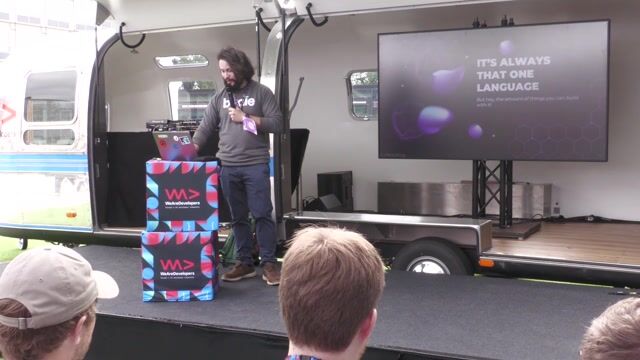
03:43 MIN
Remembering solved challenges in web development history
The year 3000, a brief history of Web Development
Unlock full access
Log in or set up an account to access this feature and more.
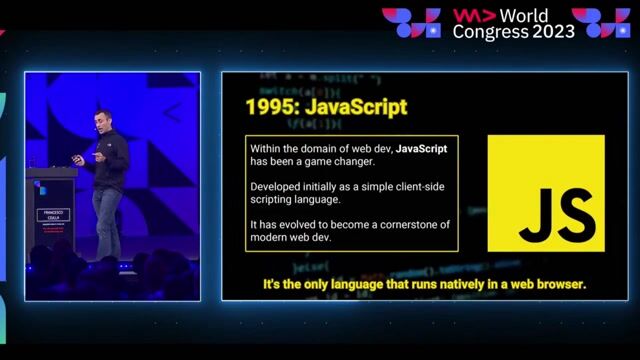
03:10 MIN
How JavaScript and its ecosystem shaped the web
From Punch Cards to AI-assisted Development
Unlock full access
Log in or set up an account to access this feature and more.
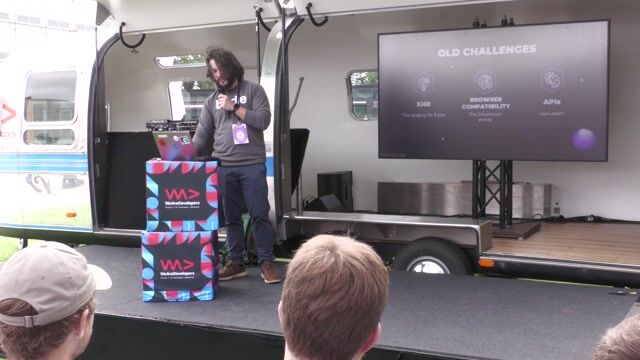
02:50 MIN
Identifying persistent challenges in modern web development
The year 3000, a brief history of Web Development
Unlock full access
Log in or set up an account to access this feature and more.
Featured Partners
Related Videos
26:51The Resilience of the World Wide Web
 43:11
43:11The State Of The Web
Jeremy Keith
 14:44
14:44Catching up on the basics you don't really need that much code
Chris Heilmann
 29:11
29:11Design Principles For The Web
Jeremy Keith
 1:15:44
Using all the HTML, Running State of the Browser and "Modern" is Rubbish
Chris Heilmann & Daniel Cranney and David Letorey
 32:56
32:56Web development: where are we, and where are we going?
Laurie Voss
 46:46
46:46The Lean Web
Chris Ferdinandi
 44:43
44:43Explore new web features before everyone else
Nikita Dubko
Related Articles
View all articles


.webp?w=240&auto=compress,format)
From learning to earning
Jobs that call for the skills explored in this talk.


ELFIN Engineering and Solutions GmbH
€60-68K
Vue.js
Node.js
TypeScript
Software Architecture
+1
Tech Solutions Gmbh
GIT
HTML
Vue.js
Tech Solutions Gmbh
GIT
HTML
Vue.js
Tech Solutions Gmbh
GIT
HTML
Vue.js
Codext GmbH
Wolpertshausen, Germany
€40K
HTML
Node.js
TypeScript
TWT Group TWT Group
Remote
Senior
HTML
Typo3
DevOps
Vue.js
+7
Zebresel - Deine Agentur für d igitale Medien.
GIT
HTML
Vue.js
Node.js