Soroosh Khodami
Why and when should we consider Stream Processing frameworks in our solutions
#1about 2 minutes
Differentiating stream processing from event processing
Stream processing focuses on transforming continuous data streams, whereas event processing is about making decisions and triggering actions based on individual messages.
#2about 2 minutes
Handling out-of-order data with event time
Stream processing frameworks can reorder messages based on when the event actually occurred (event time) rather than when it was received (processing time).
#3about 2 minutes
Understanding message delivery guarantees
Frameworks provide mechanisms for exactly-once processing, which prevents duplicate message processing and is critical for financial systems.
#4about 3 minutes
Building data pipelines with sources and operators
Data pipelines are constructed by chaining operators that read from a source, apply transformations like filtering or joining, and write to a sink.
#5about 5 minutes
Using windowing to process continuous data streams
Windowing groups unbounded data into finite chunks for processing, with types like tumbling, sliding, and session windows serving different analytical needs.
#6about 1 minute
Joining data from multiple real-time streams
You can combine data from multiple streams using familiar concepts like inner joins and cross joins to create enriched data outputs.
#7about 2 minutes
Implementing complex logic with stateful processing
Stateful processing allows operators to store and retrieve data in memory, enabling complex logic like tracking user behavior or detecting fraud patterns over time.
#8about 1 minute
Overview of popular stream processing frameworks
Key frameworks for stream processing include Apache Flink, Apache Beam, Spark Streaming, and Kafka Streams, with cloud platforms offering managed services.
#9about 4 minutes
Comparing Spring Boot vs Apache Beam performance
A practical benchmark shows that while Apache Beam offers higher throughput, a standard Spring Boot and Redis setup can be sufficient and more cost-effective for many use cases.
#10about 3 minutes
Weighing the benefits and significant drawbacks
While powerful, stream processing frameworks are complex to learn, difficult to maintain and debug, and have a steep learning curve for development teams.
#11about 1 minute
Real-world use cases for stream processing
Stream processing is heavily used in industries like gaming for anti-cheat systems, IoT for real-time traffic data, and finance for fraud detection.
#12about 2 minutes
Learning resources and communicating with stakeholders
Before adopting these complex frameworks, it is crucial to manage stakeholder expectations about the high cost and difficulty of implementing and changing data pipelines.
Related jobs
Jobs that call for the skills explored in this talk.


Matching moments

04:18 MIN
Why modern applications adopt event streaming
Event Messaging and Streaming with Apache Pulsar
Unlock full access
Log in or set up an account to access this feature and more.
04:23 MIN
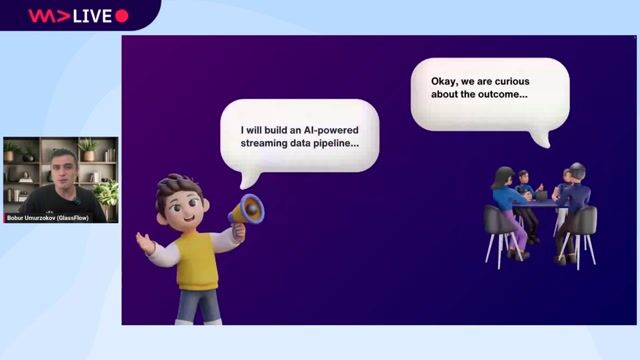
A traditional approach to streaming with Kafka and Debezium
Python-Based Data Streaming Pipelines Within Minutes
Unlock full access
Log in or set up an account to access this feature and more.

04:18 MIN
Using streaming data to power real-time agent applications
Unlocking Value from Data: The Key to Smarter Business Decisions-
Unlock full access
Log in or set up an account to access this feature and more.
07:00 MIN
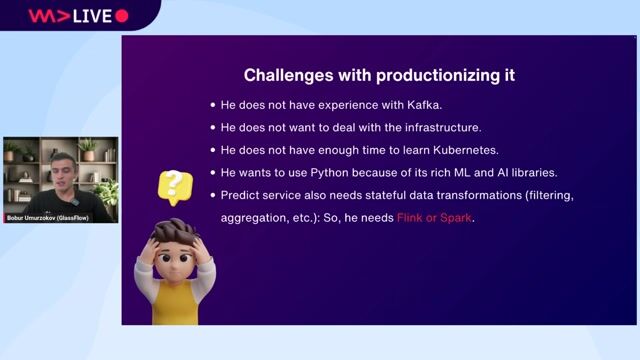
Exploring the operational complexity of Kafka and Flink
Python-Based Data Streaming Pipelines Within Minutes
Unlock full access
Log in or set up an account to access this feature and more.
03:15 MIN
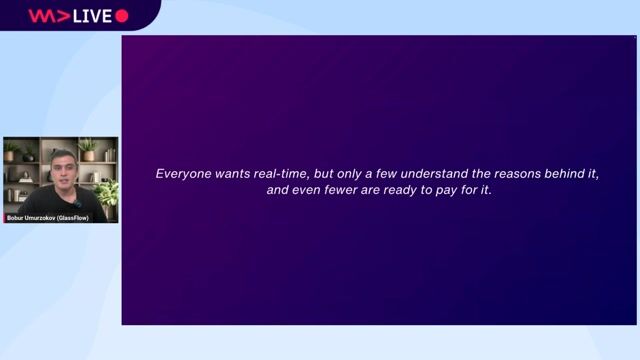
Understanding the challenges of adopting real-time data streaming
Python-Based Data Streaming Pipelines Within Minutes
Unlock full access
Log in or set up an account to access this feature and more.
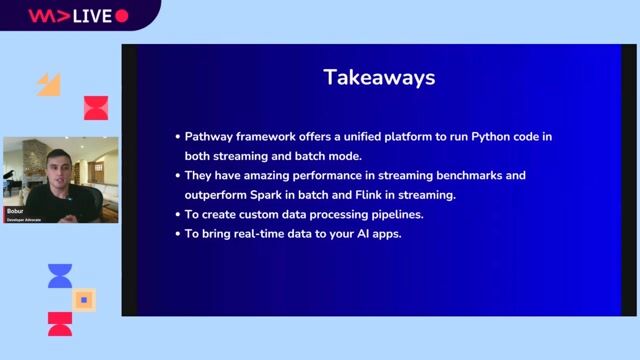
01:31 MIN
Key takeaways for modern data processing
Convert batch code into streaming with Python
Unlock full access
Log in or set up an account to access this feature and more.

02:57 MIN
Understanding the purpose and core use cases of Kafka
Let's Get Started With Apache Kafka® for Python Developers
Unlock full access
Log in or set up an account to access this feature and more.
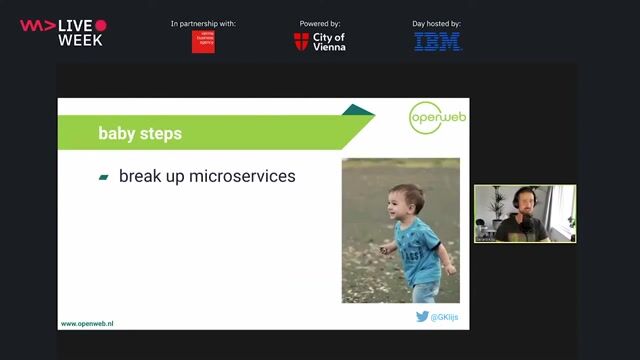
03:41 MIN
Decoupling microservices with event streams
From event streaming to event sourcing 101
Unlock full access
Log in or set up an account to access this feature and more.
Featured Partners
Related Videos
 45:48
45:48Kafka Streams Microservices
Denis Washington & Olli Salonen
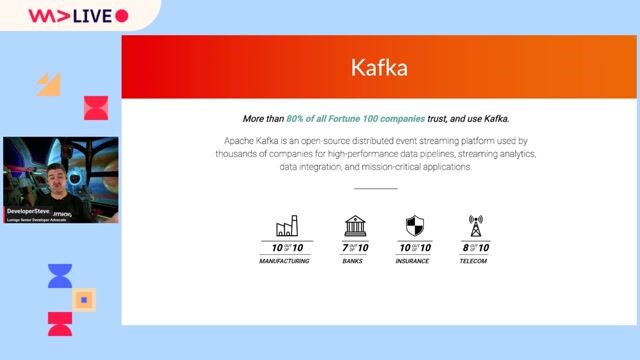 54:29
54:29Tips, Techniques, and Common Pitfalls Debugging Kafka
DeveloperSteve
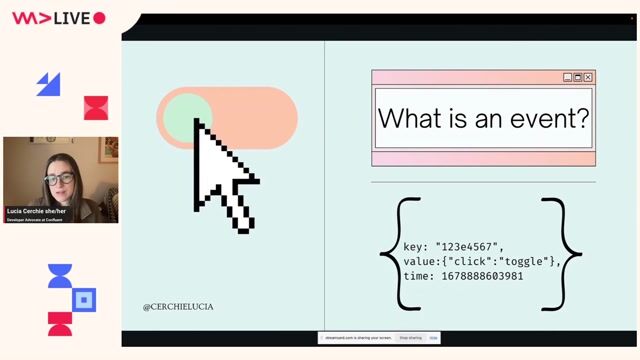 38:50
38:50Let's Get Started With Apache Kafka® for Python Developers
Lucia Cerchie
 35:27
35:27How to Benchmark Your Apache Kafka
Kirill Kulikov
 46:43
46:43Convert batch code into streaming with Python
Bobur Umurzokov
 39:04
39:04Python-Based Data Streaming Pipelines Within Minutes
Bobur Umurzokov
 57:19
57:19Event Messaging and Streaming with Apache Pulsar
Mary Grygleski
 27:33
27:33From event streaming to event sourcing 101
Gerard Klijs
Related Articles
View all articles



From learning to earning
Jobs that call for the skills explored in this talk.


AUTO1 Group SE
Berlin, Germany
Intermediate
Senior
ELK
Terraform
Elasticsearch


CONTIAMO GMBH
Berlin, Germany
Senior
Python
Docker
TypeScript
PostgreSQL

SYSKRON GmbH
Regensburg, Germany
Intermediate
Senior
.NET
Python
Kubernetes


iov42
Vienna, Austria
Senior
Java
Spring
Ethereum
PostgreSQL
Blockchain
+3


