Kevin Dubois
Infusing Generative AI in your Java Apps with LangChain4j
#1about 3 minutes
Integrating generative AI into Java applications with LangChain4j
LangChain4j simplifies consuming AI model APIs for Java developers, avoiding the need for deep data science expertise.
#2about 3 minutes
Creating a new Quarkus project with LangChain4j
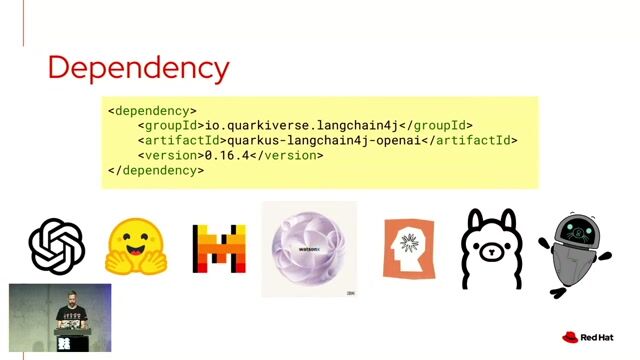
Use the Quarkus CLI to bootstrap a new Java application and add the necessary LangChain4j dependency for OpenAI integration.
#3about 2 minutes
Using prompts and AI services in LangChain4j
Define AI interactions using the @RegisterAIService annotation, system messages for context, and user messages with dynamic placeholders.
#4about 2 minutes
Managing conversational context with memory
LangChain4j uses memory to retain context across multiple calls, with the @MemoryId annotation enabling parallel conversations.
#5about 2 minutes
Connecting AI models to business logic with tools
Use the @Tool annotation to expose Java methods to the AI model, allowing it to execute business logic like sending an email.
#6about 5 minutes
Live demo of prompts, tools, and the Dev UI
A practical demonstration shows how to generate a haiku using a prompt and then use a custom tool to send it via email, verified with Mailpit.
#7about 3 minutes
Providing custom knowledge with retrieval-augmented generation (RAG)
Enhance LLM responses with your own business data by using an embedding store or Quarkus's simplified 'Easy RAG' feature.
#8about 6 minutes
Building a chatbot with a custom knowledge base
A chatbot demo uses a terms of service document via RAG to correctly enforce a business rule for booking cancellations.
#9about 2 minutes
Using local models and implementing fault tolerance
Run LLMs on your local machine with Podman AI Lab and make your application resilient to failures using SmallRye Fault Tolerance annotations.
#10about 4 minutes
Demonstrating fault tolerance with a local LLM
A final demo shows an application calling a locally-run model and triggering a fallback mechanism when the model service is unavailable.
Related jobs
Jobs that call for the skills explored in this talk.


Matching moments
02:20 MIN
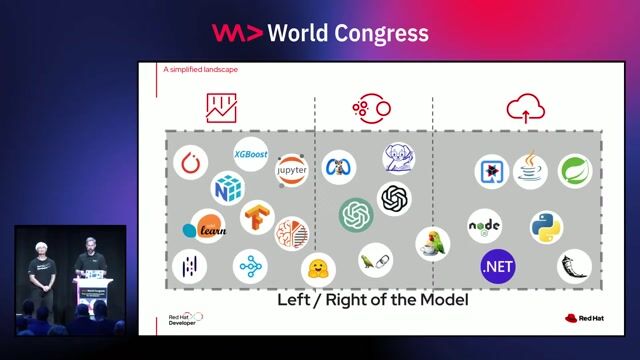
Understanding LangChain4j for Java AI applications
Create AI-Infused Java Apps with LangChain4j
Unlock full access
Log in or set up an account to access this feature and more.
01:59 MIN
Why Java is a strong choice for enterprise AI applications
Agentic AI Systems for Critical Workloads
Unlock full access
Log in or set up an account to access this feature and more.
02:54 MIN
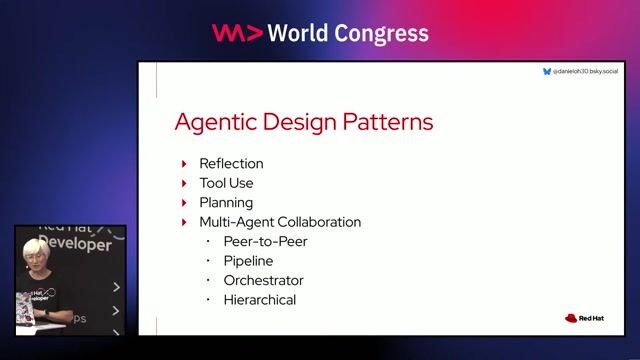
Exploring frameworks for building agentic AI applications in Java
Supercharge Agentic AI Apps: A DevEx-Driven Approach to Cloud-Native Scaffolding
Unlock full access
Log in or set up an account to access this feature and more.
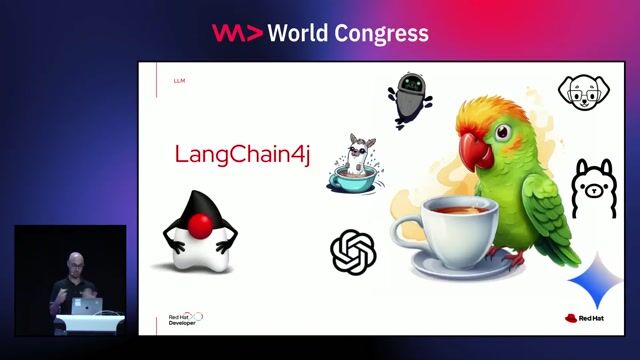
04:24 MIN
An overview of the LangChain4j framework for Java
AI Agents Graph: Your following tool in your Java AI journey
Unlock full access
Log in or set up an account to access this feature and more.
04:44 MIN
Demo of an AI assistant using LangChain4j and Quarkus
Create AI-Infused Java Apps with LangChain4j
Unlock full access
Log in or set up an account to access this feature and more.
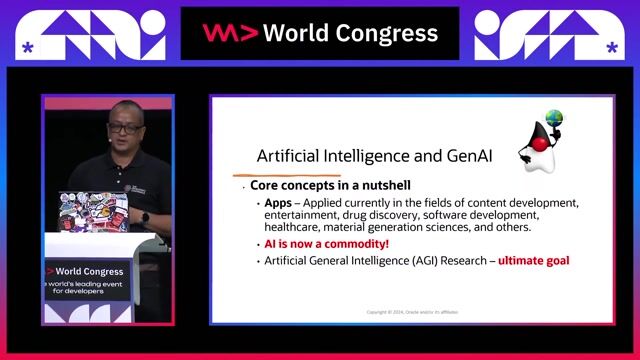
04:40 MIN
Simplifying GenAI development with the LangChain4J framework
Langchain4J - An Introduction for Impatient Developers
Unlock full access
Log in or set up an account to access this feature and more.
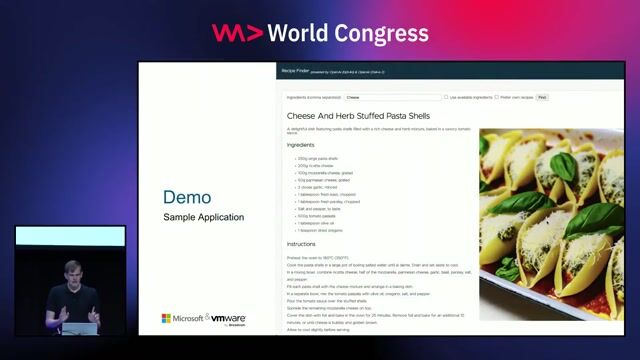
06:57 MIN
Building an AI application using LangChain4j
Java Meets AI: Empowering Spring Developers to Build Intelligent Apps
Unlock full access
Log in or set up an account to access this feature and more.
02:57 MIN
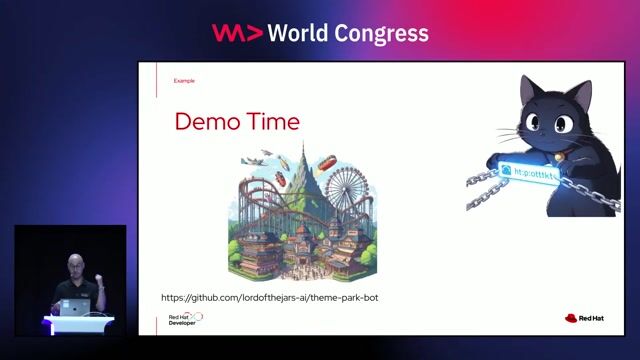
Building a simple theme park chatbot with LangChain4j
AI Agents Graph: Your following tool in your Java AI journey
Unlock full access
Log in or set up an account to access this feature and more.
Featured Partners
Related Videos
 29:18
29:18Create AI-Infused Java Apps with LangChain4j
Daniel Oh & Kevin Dubois
 31:59
31:59Langchain4J - An Introduction for Impatient Developers
Juarez Junior
 32:13
32:13Supercharge your cloud-native applications with Generative AI
Cedric Clyburn
 31:53
31:53Java Meets AI: Empowering Spring Developers to Build Intelligent Apps
Timo Salm
 30:01
30:01Agentic AI Systems for Critical Workloads
Mario Fusco
 31:02
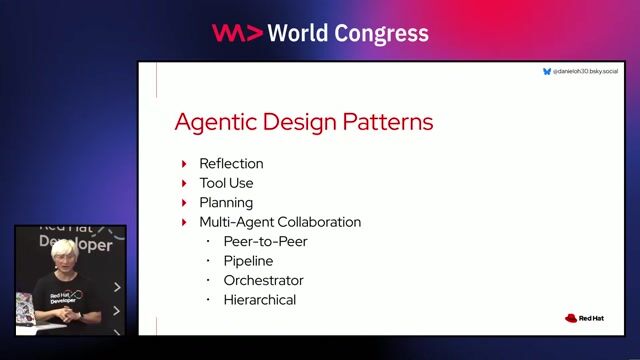
31:02Supercharge Agentic AI Apps: A DevEx-Driven Approach to Cloud-Native Scaffolding
Daniel Oh
 32:14
32:14Building AI-Driven Spring Applications With Spring AI
Timo Salm & Sandra Ahlgrimm
 26:54
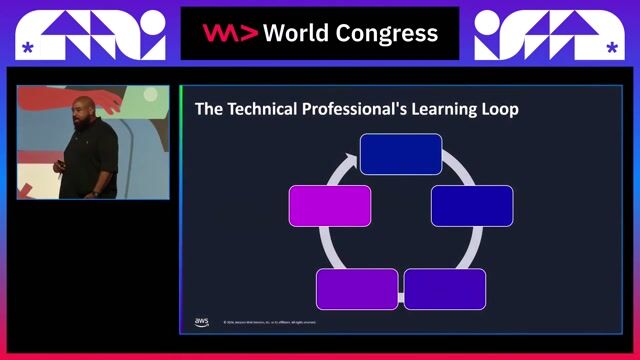
26:54Make it simple, using generative AI to accelerate learning
Duan Lightfoot
Related Articles
View all articles



From learning to earning
Jobs that call for the skills explored in this talk.


KI Group
Wiesbaden, Germany
€55-75K
Intermediate
GIT
MySQL
NoSQL
Redis
+13